Build Arch- Home Interiors in Hennur

Build Arch- Home Interiors in Hennur
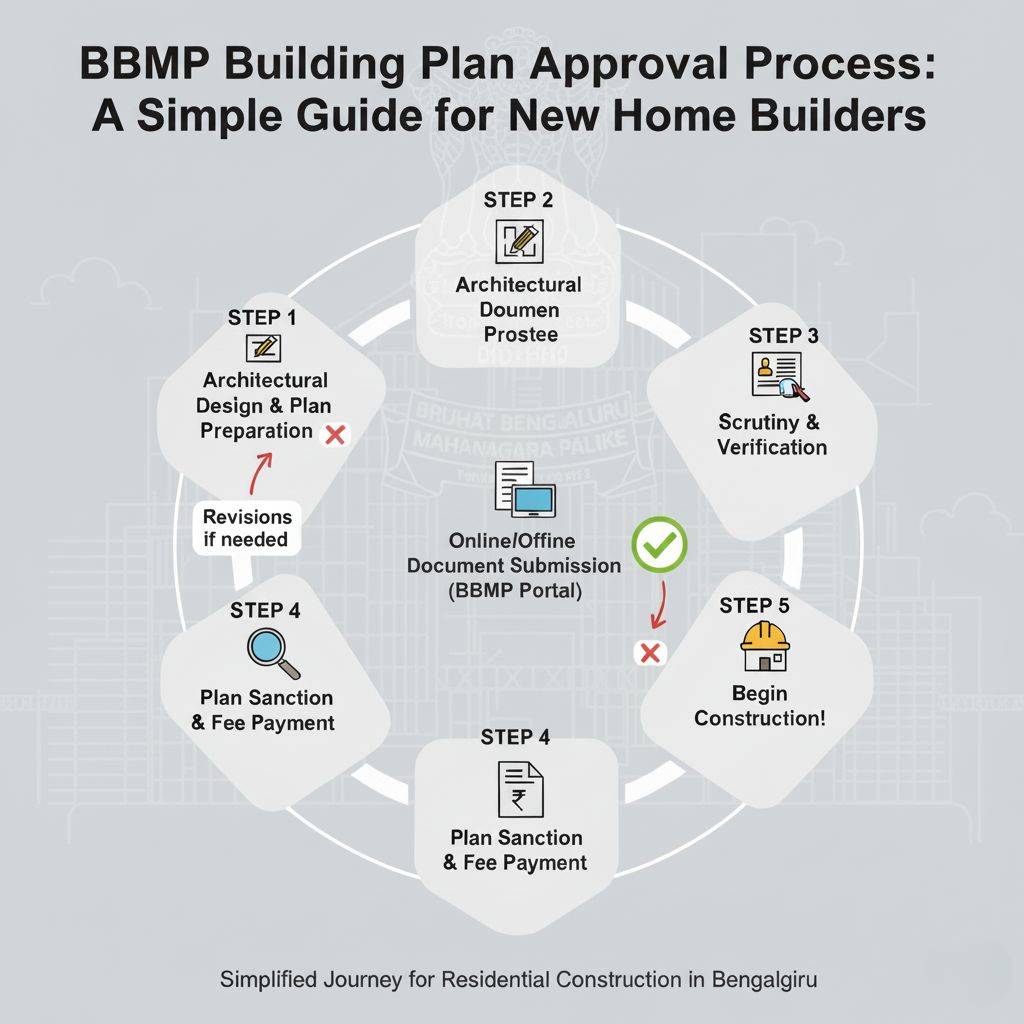
Bengaluru’s real estate ecosystem is stricter than ever. With increasing focus on urban planning, zoning control, and safety, BBMP has strengthened its guidelines to ensure buildings adhere to:
Proper FAR usage
Accurate setbacks
Fire and structural safety
Road width regulations
Environmental compliance
In 2025, unauthorized construction is monitored closely with satellite mapping, local inspections, and citizen complaints via the BBMP Sahaaya app. Owners building without approval risk:
Demolition notices
Heavy penalties
No water/electricity connections
Difficulty selling or renting property
Legal cases or property disputes
A sanctioned BBMP plan is your legal protection, ensuring your home is safe, compliant, and future-proof.
Before understanding the process, it’s important to know the key parameters BBMP checks.
Defines how much you can build based on plot size and road width.
Required open space around your building—varies for 20×30, 30×40, 40×60 sites.
Your property account; must be updated and in your name.
Whether your plot falls under residential, mixed residential, or commercial zones.
Mandatory certification by a licensed structural engineer.
Understanding these ensures your design meets BBMP rules from day one.
BBMP approval differs from other authorities like BDA, BIAPPA, or Panchayat because:
The system is fully online (AutoDCR + BPA).
Only registered architects can upload plans.
Strict scrutiny of FAR and setback compliance.
Road width is verified independently by BBMP inspectors.
Digitally signed sanction plans are issued.
All payments are online—no manual receipts.
BBMP also rejects plans created by unauthorized draftsmen, which is a common reason applications get delayed or dismissed.
Your architect prepares:
Concept plan
Architectural drawings
FAR calculation
Setback compliance
Digital CAD drawings for AutoDCR
BBMP only accepts submissions from licensed engineers/architects.
Here is the complete checklist:
Latest Khata Certificate & Extract
Latest Tax Paid Receipt
Sale Deed / Gift Deed / Partition Deed
Encumbrance Certificate (EC)
Mother deed (if required)
Proposed building plan
Architect’s License Copy
Structural Stability Certificate
Soil test (for G+3 and above)
Site photographs
Existing building details (if extension)
Fire NOC
Airport height clearance
High tension line NOC
Environmental clearance (large plots)
Your architect uploads drawings to the BBMP AutoDCR system.
The system checks:
FAR
Setbacks
Building height
Zoning rules
If errors are detected, drawings must be revised before moving forward.
BBMP officials verify your:
Documents
Property details
Ownership
Road width
Site condition
If clarification is needed, they send a query via the portal.
A junior engineer visits the site to confirm:
Site measurements
Coordinates
No illegal construction
Correct road width
This step is crucial—any mismatch between the sale deed and actual measurement delays approval.
These include:
Licence fee
Betterment charges (if applicable)
Scrutiny fee
Impact fee (for additional floors)
All payments are made online.
Once cleared, BBMP issues:
Sanctioned Building Plan
Building Licence
PR Card (Permission Registry)
You can now legally begin construction.
For residential properties, approximate charges are:
| Plot Size | Typical Range |
|---|---|
| 20×30 (600 sq ft) | ₹25,000–₹45,000 |
| 30×40 (1200 sq ft) | ₹35,000–₹65,000 |
| 40×60 (2400 sq ft) | ₹50,000–₹1,20,000 |
| G+2 / G+3 Homes | ₹80,000–₹2,00,000+ |
Costs depend on:
Zone
Road width
Number of floors
FAR usage
Betterment charges
BBMP rejects all drawings uploaded by unregistered draftsmen.
Many builders reduce setbacks to increase room sizes—this leads to rejection.
BBMP verifies road width independently.
Documents must be updated at the time of submission.
Sale deed size must match the site on ground.
BBMP requires elevation, section, foundation, and floor plans.
This attracts penalties and demolition risk.
WhatsApp us