Build Arch- Home Interiors in Hennur

House Plan

Kalyan Nagar's Most Prestigious Streets: Architectural Excellence and Location Strategy for Custom Homes
House Plan

Kalyan Nagar’s Most Prestigious Streets: Architectural Excellence and Location Strategy for Custom Homes

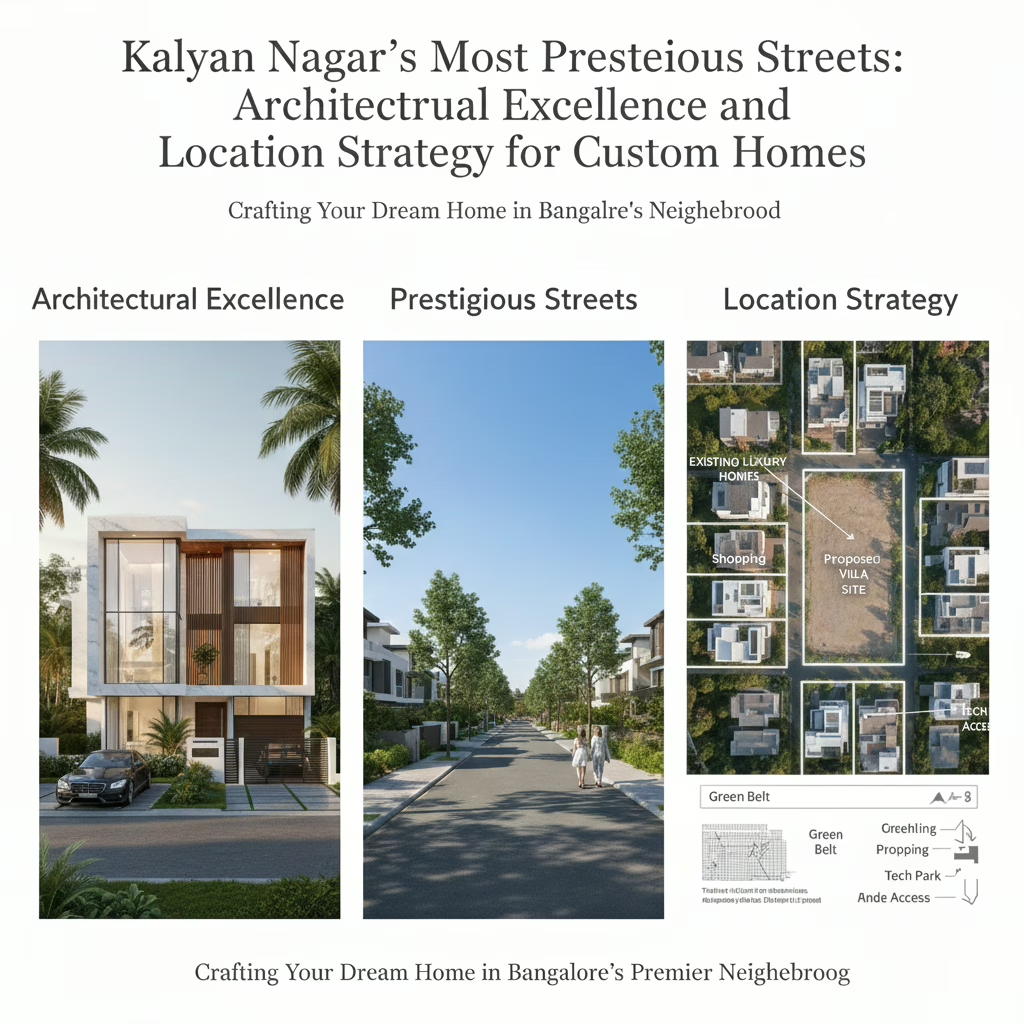
Kalyan Nagar’s Most Prestigious Streets: Architectural Excellence and Location Strategy for Custom Homes Kalyan Nagar has quietly evolved into one of North Bangalore’s most coveted residential micro-markets for discerning homeowners. Known for its tree-lined streets, excellent social infrastructure, and proximity to CBD extensions like HRBR Layout and Hennur Road, the area has become a hotspot for custom home design in Kalyan Nagar—particularly among professionals, entrepreneurs, and legacy families seeking architectural distinction over builder-grade uniformity. What truly sets Kalyan Nagar apart is not just the neighborhood, but specific streets and pockets where architectural excellence, plot orientation, and zoning advantages come together to support bespoke residential design. In this blog, we explore Kalyan Nagar’s most prestigious streets, how architects evaluate location strategy, and why custom homes here command long-term value. Why Location Strategy Matters in Custom Home Design In premium neighborhoods like Kalyan Nagar, location is not simply about pin codes—it is about street hierarchy, plot character, setbacks, light access, and long-term appreciation. Custom homes are designed from the inside out, but their success depends heavily on external factors that only a location-sensitive architectural approach can unlock. Architects specializing in custom home design in Kalyan Nagar analyze how a plot interacts with its immediate surroundings—road width, neighboring building heights, tree cover, and even traffic patterns. A well-chosen street can significantly enhance ventilation, privacy, façade visibility, and resale value, allowing the architecture to perform at its best. What Makes a Street “Prestigious” in Kalyan Nagar Prestige in Kalyan Nagar is subtle. It isn’t about flashy signage or gated compounds—it’s about consistency, restraint, and architectural maturity. The most sought-after streets share a combination of planning discipline and lifestyle appeal. Key Characteristics of Prestigious Streets Wider internal roads (30–40 feet) with organized parking Predominantly independent homes or low-density villas Mature tree canopies providing micro-climate benefits Strict residential zoning with limited commercial intrusion A growing presence of architect-designed custom homes These streets attract homeowners who value privacy, individuality, and long-term design relevance rather than quick speculative construction. Most Prestigious Streets & Pockets in Kalyan Nagar 1. HRBR Layout 1st & 2nd Block (Bordering Kalyan Nagar) Although technically part of HRBR Layout, these blocks are closely integrated with Kalyan Nagar and are among the most architecturally refined areas in the zone. Large rectangular plots, clean road grids, and controlled development make this area ideal for high-end custom residences. Custom homes here often feature modern tropical architecture, internal courtyards, and multi-level planning—enabled by favorable bylaws and consistent street character. Why architects prefer this pocket: Excellent plot proportions Strong façade visibility Minimal height obstruction from neighbors 2. Inner Residential Streets Near Kalyan Nagar Main Road The inner lanes branching off Kalyan Nagar Main Road offer a quieter environment while retaining strong connectivity. These streets are increasingly seeing older homes replaced with bespoke residences designed for multigenerational living. Architectural strategies here focus on sound insulation, privacy buffers, and inward-looking layouts that shield homes from nearby commercial activity without compromising natural light. Ideal for: Families upgrading ancestral properties Homeowners planning custom homes with rental floors Long-term self-use residences 3. Streets Connecting to Hennur Cross Road Select residential streets closer to Hennur Cross Road are emerging as prestige pockets due to infrastructure upgrades and improved traffic flow. Plots here benefit from higher appreciation potential, making them attractive for homeowners who want both lifestyle quality and investment value. Custom homes in these areas often balance contemporary design with resale sensibility, ensuring architectural uniqueness without over-customization. Architectural Excellence: How Custom Homes Elevate These Streets As more homeowners opt for custom home design in Kalyan Nagar, the overall architectural language of the neighborhood is evolving. Builder floors and generic elevations are giving way to thoughtfully designed homes that respond to climate, context, and lifestyle. Common Architectural Themes in Premium Kalyan Nagar Homes Clean modern façades with natural materials Double-height living spaces for light and ventilation Passive cooling through courtyards and skylights Flexible floor plans for evolving family needs Integrated landscape design, even on compact plots Firms like BuildArch approach these projects holistically—ensuring that the architecture complements the street rather than overpowering it. Plot Orientation & Bylaws: The Silent Design Drivers One of the reasons prestigious streets outperform others is their design flexibility. North- and east-facing plots on wider roads allow architects to optimize room placement, window sizes, and circulation without compromising privacy. Key considerations include: Setback utilization for green buffers Staircase placement for future expansion Parking integration without dominating the façade Compliance with BBMP residential bylaws Strategic architectural planning ensures that homes remain relevant for decades, not just visually impressive at completion. Smart Budgeting Through Location-Led Design Contrary to popular belief, choosing the right street can actually reduce construction inefficiencies. Well-oriented plots with fewer constraints require less structural correction, artificial lighting, and mechanical ventilation—resulting in long-term cost savings. Smart architectural budgeting includes: Investing more in design, less in retrofits Using natural light instead of oversized glazing Designing for phased construction if needed Prioritizing timeless materials over trend-driven finishes At BuildArch, budgeting is aligned with both location potential and homeowner priorities, ensuring value-driven customization. Why Kalyan Nagar Continues to Attract Custom Homeowners Kalyan Nagar’s appeal lies in its balance—it offers urban convenience without the density stress of older central areas. With schools, hospitals, cafes, and arterial roads nearby, it supports a high-quality lifestyle while still allowing architectural individuality. As land availability reduces, custom-designed homes on prestigious streets will increasingly define the neighborhood’s identity and value. BuildArch Perspective: Designing Homes That Belong At BuildArch, custom home design in Kalyan Nagar begins with understanding the street as much as the client. Every project is approached as a permanent addition to the neighborhood—respecting context, enhancing streetscape value, and delivering homes that age gracefully. From site analysis and concept design to approvals and execution coordination, BuildArch ensures that architecture and location strategy work as one. FAQs: Custom Home Design Kalyan Nagar Which streets are best for custom homes in Kalyan Nagar? Inner residential streets near HRBR Layout blocks and select lanes off Kalyan Nagar Main Road are considered premium
"Kalyan Nagar's Most Prestigious Streets: Architectural Excellence and Location Strategy for Custom Homes"
House Plan

“Kalyan Nagar’s Most Prestigious Streets: Architectural Excellence andLocation Strategy for Custom Homes”

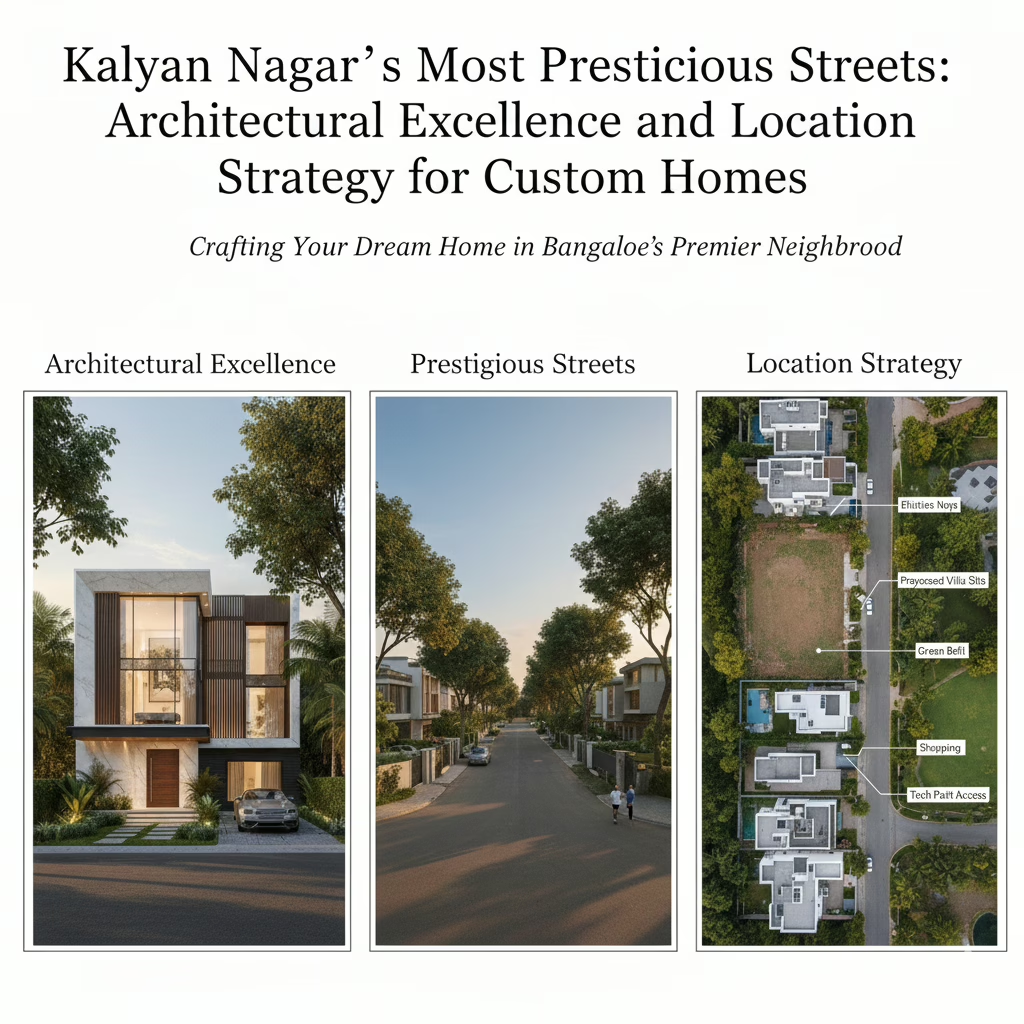
“Kalyan Nagar’s Most Prestigious Streets: Architectural Excellence and Location Strategy for Custom Homes” Kalyan Nagar’s Most Prestigious Streets: Architectural Excellence and Location Strategy for Custom Homes Kalyan Nagar has emerged as one of North Bangalore’s most refined residential pockets—not through high-rise density or gated developments, but through a steady evolution of independent, architect-designed homes. What distinguishes Kalyan Nagar from other luxury neighborhoods is that prestige here is not announced loudly; it is expressed through street character, plot planning, and architectural restraint. For homeowners planning custom homes in Kalyan Nagar, choosing the right street is as critical as choosing the right architect. Orientation, road width, surrounding built form, zoning clarity, and long-term neighborhood stability all influence how a home can be designed—and how it will perform as a lifestyle asset. This blog explores Kalyan Nagar’s most prestigious residential streets, how architecture responds to these micro-locations, and why location strategy plays a decisive role in successful custom home design. Why Streets Matter More Than Pin Codes in Kalyan Nagar Unlike master-planned layouts, Kalyan Nagar is defined by micro-neighborhoods. Two plots just a few streets apart can offer vastly different architectural possibilities. Prestige in Kalyan Nagar is shaped by: Low commercial intrusion Consistent residential setbacks Tree-lined internal roads Controlled traffic flow Established independent home fabric For architects, these conditions create the freedom to design homes that prioritize privacy, daylight, ventilation, and facade expression—without defensive planning. Custom homes in premium streets feel calmer, age better, and command higher long-term value because the surrounding environment supports architectural intent. Interior Residential Streets: The True Luxury Zones The most sought-after streets in Kalyan Nagar are interior residential roads, set away from arterial traffic. These streets are typically quieter, greener, and visually cohesive. Architecturally, such streets allow: Larger window openings without privacy compromise Courtyard planning and inward-looking spaces Open balconies and terraces facing the street Subtle yet refined facade articulation Homes on these streets often follow a language of understated luxury—natural materials, layered elevations, and restrained lighting rather than flashy exteriors. Why architects prefer interior streets: Better acoustic comfort Stable residential zoning Predictable neighbor scale Long-term neighborhood character For homeowners, these streets offer the rare combination of urban accessibility and residential calm. Wide Roads & Corner Plots: Visibility Meets Design Opportunity Certain wide roads and corner plots in Kalyan Nagar are considered premium due to frontage advantages and architectural visibility. When designed well, these plots can host striking contemporary homes that become reference points within the neighborhood. Corner plots allow: Dual frontage and better ventilation Flexible entry and parking strategies Stronger facade presence Clear zoning separation between public and private areas However, architectural discipline is critical. Without thoughtful planning, visibility can compromise privacy. Successful custom homes on such plots use: Layered screens Recessed balconies Vertical fins and jaalis Strategic landscaping Architect-led design ensures the home stands out for its elegance—not excess. Streets with Established Independent Homes: Design Consistency & Value Prestige is often reinforced by contextual harmony. Streets dominated by independent villas and architect-designed homes tend to retain value better than mixed-use stretches. From an architectural perspective, these streets allow: Consistent building heights Predictable shadow and setback conditions Cleaner skyline and street rhythm Custom homes designed here often take cues from surrounding scale while introducing modern interpretation—creating continuity without imitation. Benefits of such streets: Higher resale perception Strong neighborhood identity Reduced risk of commercial conversion Better civic maintenance over time For long-term homeowners, this stability is invaluable. Architectural Character of Prestigious Kalyan Nagar Streets Prestigious streets in Kalyan Nagar share certain architectural traits—not imposed by regulation, but by collective design maturity. Common characteristics include: Contemporary tropical architecture Emphasis on horizontal lines and depth Neutral, earthy material palettes Facades designed for Bangalore’s climate Landscaped setbacks and entrance courts Rather than loud statements, homes here express confidence through proportion, detailing, and material quality. This environment encourages architects to focus on refinement rather than novelty. Location Strategy: How Architects Evaluate Streets Before Designing Before design begins, experienced architects analyze the street as carefully as the plot itself. Key evaluation parameters include: Road width and traffic behavior Orientation and solar exposure Neighboring building heights Tree cover and existing vegetation Zoning stability and future risk At BuildArch, location strategy is a foundational step. The design response for a quiet interior street differs significantly from that of a wide road or corner plot—even within the same neighborhood. This strategic approach ensures the home fits naturally into its context while maximizing comfort and long-term value. Budget, Architecture & Street Selection: How Micro-Location Shapes Investment Outcomes In Kalyan Nagar, the relationship between budget, architecture, and street selection is deeply interconnected. While many homeowners initially focus on plot size or built-up area, experienced architects understand that the street itself quietly dictates design decisions, construction costs, and long-term value. Choosing the right street can simplify architectural execution, reduce unnecessary expenses, and significantly improve return on investment. Conversely, ignoring street dynamics often leads to over-engineered solutions that inflate budgets without adding meaningful value. Interior Residential Streets: Cost-Efficient Luxury Homes located on calm interior streets typically allow architects to design with greater freedom and efficiency. Because privacy concerns are lower and traffic movement is minimal, architectural solutions can remain elegant rather than defensive. From a budget perspective, these streets often: Reduce the need for high boundary walls and heavy screening Allow simpler facade articulation without compromising privacy Enable larger openings for daylight and ventilation, reducing lighting and cooling loads Support inward-looking courtyard planning, which improves thermal comfort naturally As a result, homeowners can allocate more budget toward materials, interiors, and spatial quality rather than security-driven construction. Over time, such homes also benefit from lower maintenance costs and stronger livability, enhancing both emotional and financial ROI. Wide Roads & High-Visibility Streets: Design-Driven Budget Allocation Wide roads and prominent streets introduce a different architectural equation. While these locations offer visibility and status, they also demand a more nuanced design approach to protect privacy and acoustic comfort. Architectural responses here often include: Layered facades with depth and articulation Architectural screens, fins, and

Affordable Interior Design Solutions in Bangalore: Budget-Friendly Architects Near You
House Plan

Affordable Interior Design Solutions in Bangalore: Budget-Friendly Architects Near You

Affordable Interior Design Solutions in Bangalore: Budget-Friendly Architects Near You Introduction: Why Affordable Interior Design Is Becoming the New Normal in Bangalore Interior design in Bangalore has shifted dramatically in the last few years—especially in bustling neighborhoods like Kalyan Nagar, Hennur, and Whitefield, where a large portion of homeowners are seeking smart, functional and beautiful interior spaces without blowing up their budget. Gone are the days when hiring an interior designer was considered a luxury for premium villas or large independent homes. Today, with apartments, mid-size homes and compact urban living, more people are looking for a budget-friendly interior designer near me to deliver stylish, practical and customized interiors—at a price that makes sense. Why? Because lifestyle is changing. The modern Bangalore homeowner is looking for: Cost-effective yet high-quality interiors Faster execution timelines Small space optimization Stylish modular design solutions Low-maintenance finishes More importantly, the rise of professional and affordable home interior consultants in Bangalore has made it easier than ever to get a designer home without spending lakhs on unnecessary materials, complicated carpentry or expensive brands. Instead, people now want:✔ Value✔ Smart choices✔ Transparent pricing✔ Long-lasting durability Whether you’re in Whitefield’s gated apartment communities, the independent luxury homes in Hennur, or high rental demand layouts in Kalyan Nagar, finding the right interior designer near you is no longer about the biggest budget—it’s about the smartest plan. Designers today aren’t only offering premium packages. They are offering: Pay-per-room execution Hybrid modular + customized carpentry Budget-friendly turnkey interiors Design consultation only services And that’s why “affordable interior designer near me” has become one of the most searched design services in Bangalore in recent years. Why Hiring an Affordable Designer Is Better Than DIY (And Even Cheaper) Many homeowners believe that going DIY for interiors helps them save money. But the reality is different. With a designer, you save money because you save mistakes. A professional home interior consultant in Bangalore will ensure: Correct material selection based on usage and climate Better cost control Accurate measurement and space planning Reduced wastage Optimized storage and space utilization Without a designer, most homeowners end up overspending on: Wrong finishes Unnecessary furniture Poor layout Cheap labour that requires rework Buying blindly without technical knowledge Affordable designers don’t reduce quality—they optimize budgets. They know: Which plywood lasts longer Where laminate is better than veneer How to choose carpentry vs. modular Where modular kitchen saves money Which material is worth the investment And that is where professional interior design becomes a cost-saving decision instead of a cost-adding one. How to Get Great Interior Design on a Budget (Kalyan Nagar, Hennur & Whitefield) Bangalore is a competitive design market. Especially in neighborhoods like Kalyan Nagar, Hennur and Whitefield where design and real estate are growing fast. That means there are multiple affordable solutions today—if you choose correctly. Here is how homeowners are creating premium-looking interiors without paying premium costs: 1. Prioritize must-have items first Not every element in your home needs high-end finishes. You should prioritize: Kitchen Wardrobes Storage Lighting Electrical layout Why? Because these are high-usage and high-functionality areas. They impact daily living far more than décor pieces. 2. Go Modular Where Possible Modular is faster, budget-friendly and comes with: Standardised manufacturing Faster installation Lower wastage Cleaner finish Especially in Whitefield and Hennur apartments where space is standardized, modular saves 25–32% costs compared to full custom furniture. 3. Custom-make only what is necessary For example:✔ Bay windows✔ Puja units✔ Study tables✔ Small-space wardrobes✔ Seating and shoe racks These are areas where carpentry makes more sense because of: Non-standard dimensions Design customization Permanent usage A smart designer knows when to mix both. 4. Choose finishes wisely Laminates, veneer, and acrylic are the most common. But for budget interiors: The best cost-saving choices are: Laminates for wardrobes Pre-lam boards for shelves Quartz or granite for kitchen counters PVC or WPC only in wet areas This gives value without compromising durability. 5. Keep civil and structural work to a minimum Resist the urge to: Break walls Extend balconies Shift plumbing Add unnecessary false ceilings A good designer gives smart design—not extra expenses. 6. Don’t go heavy on décor Décor should come last. Even affordable homes look premium when: Lighting is layered Colors are balanced Furniture is proportionate Space is clutter-free Interior design today is more about:💡 smart planning than expensive things. Why Interior Designers in Kalyan Nagar, Hennur & Whitefield Are Best for Budget Projects If you search interior designer near me Bangalore, you will find hundreds of companies. But working with local area designers gives you a major advantage: Local designers understand: Standard apartment layouts Space constraints Local material vendors Labour availability Cost-effective finishes Nearby branded suppliers They also have ready-made solutions because they have already worked on: Prestige apartments in Whitefield High-rise residential projects in Kalyan Nagar Villas and spacious apartments in Hennur This helps reduce: Project delays Material transportation costs Costly experimentation Affordable interiors do not mean compromising on design. It means spending smart and spending where it matters. How to Maximize ROI (Return on Investment) on Interior Design Spend Most Bangalore homeowners today are thinking smart: “How can I get maximum value from my interiors without overspending?”This is especially common in rental-friendly and fast-development areas like Whitefield, Hennur Junction, and Kalyan Nagar, where homes are expected to perform better in terms of: Resale value Rental returns Long-term durability Low maintenance This is where ROI matters. A professional affordable interior designer near you will always design for value – not just looks. Here’s how the best designers help you stretch every rupee. 1. Invest in the right spaces first Lorem ipsum dolor sit amet, consectetur adipiscing elit. Ut elit tellus, luctus nec ullamcorper mattis, pulvinar Some areas have higher ROI than others. High ROI spaces in Bangalore homes: Kitchen Master bedroom wardrobes Lighting False ceiling (only where required) Storage planning Bathroom upgrades Low ROI / “can be done later” areas: Pooja unit Bar unit TV unit styling Wall cladding Loose furniture Décor When you prioritize wisely,

Step-by-Step Guide: How BuildArch.co Designs Your Custom House Plan in Bangalore
House Plan

Step-by-Step Guide: How BuildArch.co Designs Your Custom House Plan in Bangalore

Step-by-Step Guide: How We Design Your Custom House Plan in Bangalore Step-by-Step Guide: How BuildArch.co Designs Your Custom House Plan in Bangalore Designing a home in Bangalore is not just about choosing rooms or deciding where the kitchen should be. It’s a journey that blends creativity, technical precision, and an understanding of your lifestyle. At BuildArch.co, we follow a highly structured, client-friendly process that ensures every home plan is functional, aesthetic, compliant with local rules, and tailored perfectly to your family’s needs. Whether your site is 30×40, 40×60, 50×80, corner, east-facing, north-facing, narrow, irregular, or sloping, our approach ensures your home plan is optimized for light, ventilation, structural stability, and long-term usability. This guide takes you through the exact steps we follow to create a fully customized house plan for your dream home in Bangalore. 1. Understanding Your Requirements – The Foundation of the Design Your home design begins with a detailed conversation. At BuildArch.co, we take the time to understand: Your plot size, dimension variations, and facing Family lifestyle and number of occupants Requirements for bedrooms, study room, home office, guest room, or rental units Parking needs (car, bike, EV charging) Vastu preferences Whether you want duplex, single-family, or multi-family Your interior style preference – modern, contemporary, minimalist, or traditional Future expansion plans (G+1 now, G+2 later) Balcony, terrace, and garden preferences Budget expectations This requirement analysis ensures the entire project is aligned with your lifestyle and vision. For BuildArch.co, your priorities come first — not a template plan. 2. Site Analysis & Measurement Verification A good house plan is impossible without understanding the site conditions. That’s why we analyze: Actual on-ground dimensions Surrounding buildings that might block light or ventilation Road width and access positioning Privacy concerns from neighboring houses Slope, level variations, and soil conditions North orientation and natural light flow If required, our team verifies the plot measurements on-site to avoid errors later.This ensures the design is not just beautiful — but practical for construction. 3. Compliance With BBMP / BDA / BMRDA / Panchayat Bye-laws Every home in Bangalore must follow building regulations to get approval. At BuildArch.co, we carefully apply all relevant rules based on your jurisdiction: Setback requirements FAR and FSI limits Maximum allowed floors based on road width Parking rules Ventilation and light regulations Height restrictions Staircase and balcony guidelines A plan that doesn’t meet compliance will be rejected — resulting in delays and cost overruns.We ensure your plan is 100% approval-ready right from the concept stage. 4. Concept Layout – Your Dream Begins to Take Shape Once we merge your requirements with site conditions and legal norms, we begin designing the concept layout. This is the most exciting step for our clients because it turns ideas into a visual plan. Our concept plans focus on: Smart room placements Zero wasted space Effective movement flow Maximum natural lighting Proper ventilation Vastu alignment (if opted) Logical positions for toilets, shafts, and plumbing points Efficient staircase placement Parking + entry optimization Privacy-oriented bedroom design We typically share two or three unique layout options, giving you the freedom to choose what fits your lifestyle best. 5. Revisions & Fine-Tuning Based on Your Feedback A good design is never dictated — it is shaped with your inputs. At BuildArch.co, we revise the plan until you are 100% satisfied.Typical revisions include: Changing room sizes Adding/removing balconies Adjusting the kitchen orientation Modifying the staircase location Reworking the living–dining flow Creating dedicated study or office areas Improving natural light paths Adding skylights or internal courtyards You receive updated plans promptly until the layout feels perfect.This collaborative approach is what sets BuildArch.co apart from pre-made online plans. 6. Final Architectural Drawings Once your layout is approved, our architects prepare a polished, professional set of architectural drawings that include: Floor plans for all levels Front, side, and rear elevations Building sections Door–window schedules Site plan with setbacks Area statement Ventilation and lighting details These drawings provide a clear understanding of the overall design and are used for structural engineering and approvals. 7. 3D Elevation Design – Visualizing Your Future Home Most homeowners want to see what their house will look like after construction.At BuildArch.co, our 3D elevations help you visualize: Modern and minimalist facades Contemporary glass–concrete combinations Traditional or Kerala-style designs Luxury villa concepts Material and texture combinations Night and day lighting effects 3D elevations eliminate guesswork — you see the final outcome before construction starts. 8. Structural Engineering – Ensuring Safety & Durability A beautiful plan must stand on a strong foundation. Our licensed structural engineers design: Column positions Beam sizes and alignment Slab thickness Footing design based on soil conditions Cantilever and balcony reinforcements Load calculations for safety Provisions for future floors (if required) We strictly follow IS codes to ensure your home is earthquake-resistant, stable, and future-proof. 9. Electrical, Plumbing & Service Layouts These technical drawings ensure a smooth construction process without confusion. BuildArch.co provides: Electrical layouts with switchboards, circuits, fan points, AC points Plumbing layout with inlet–outlet lines Bathroom and utility drainage plans Sump, septic tank, and overhead tank layout Rainwater harvesting layout Solar and inverter provisions TV, router, and LAN point designs Clear service drawings prevent costly on-site mistakes and save time. 10. BBMP/BDA Plan Approval Support The building plan approval process can be confusing for many owners.BuildArch.co helps you with: Document checklist Preparing approval drawings Submitting through empanelled architects Required revisions Coordination with local authorities Our support ensures a smooth and fast approval process. 11. Final Ready-to-Build Construction Drawing Package You receive a complete professional set of construction drawings, including: Architectural working drawings Structural engineering drawings Electrical layout Plumbing layout Elevation sheets Beam and slab reinforcement details Column schedule These drawings ensure your contractor has everything needed to build your home with accuracy and zero rework. 12. Optional Services for a Complete Experience BuildArch.co also provides: Full interior design with 3D Modular kitchen design Wardrobes, furniture, false ceiling Landscape and terrace planning Material specification guidance Site supervision (packages available) This makes your entire home-building

Top Mistakes Bangalore Homeowners Make When Planning Their House Layout
House Plan

Top Mistakes Bangalore Homeowners Make When Planning Their House Layout

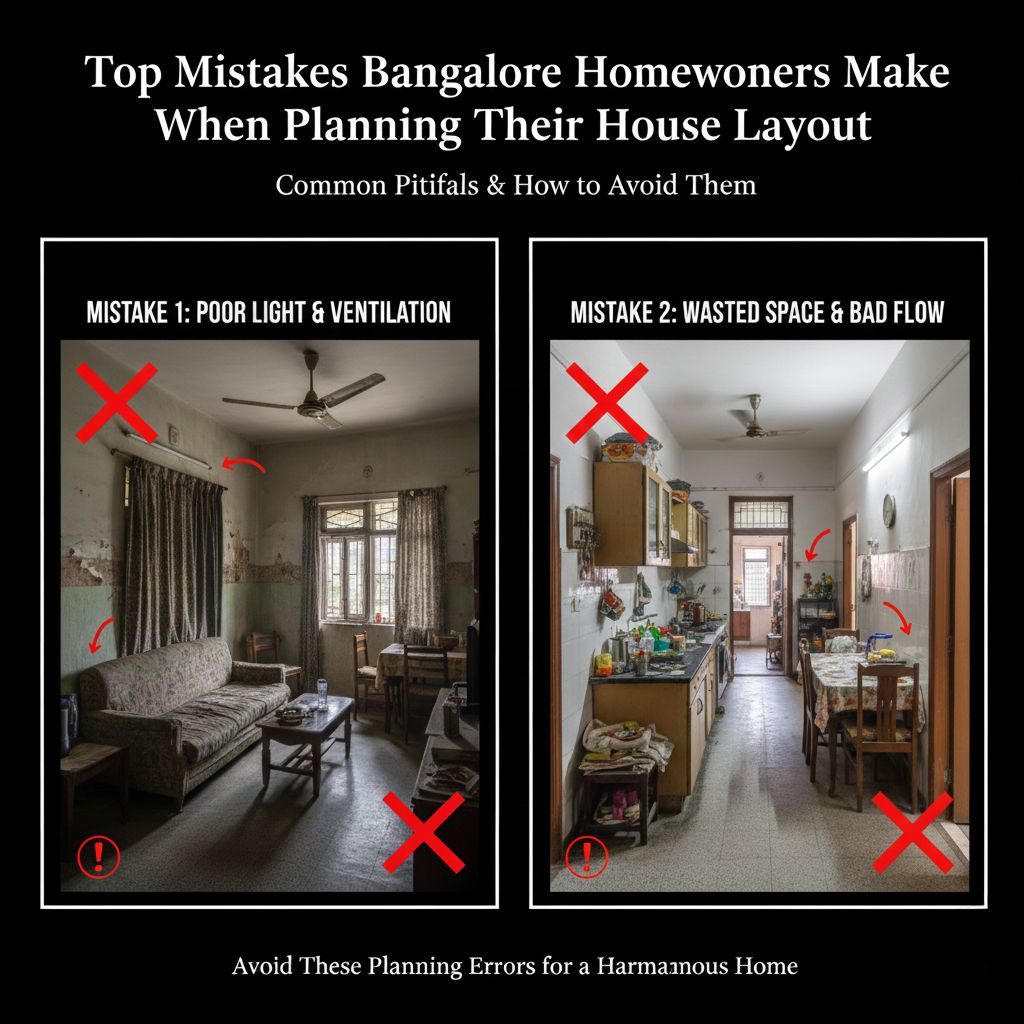
Top Mistakes Bangalore Homeowners Make When Planning Their House Layout Top Mistakes Bangalore Homeowners Make When Planning Their House Layout Planning a house layout in Bangalore is both exciting and challenging. With unpredictable plot shapes, strict BBMP bylaws, evolving lifestyle needs, Vastu considerations, and rising construction costs in 2025, even small planning errors can become expensive problems later. Many homeowners feel confident about their initial layout, only to realize during construction that the rooms feel smaller, the ventilation isn’t enough, or the staircase is poorly placed — issues that are difficult or costly to fix later. This is why understanding the top mistakes Bangalore homeowners make when planning their house layout is crucial before starting any project. Whether you’re building on a 20×30, 30×40, or 40×60 site, the layout must balance functionality, space optimization, natural lighting, and future needs. Even a single mistake can impact comfort, resale value, and long-term usability. This blog breaks down the most common layout planning mistakes and shows you how to avoid them — with insights from BuildArch’s real project experience in Bangalore. By the end, you’ll know exactly what to look for, what to avoid, and how to create a layout that works beautifully for the next 20+ years. Why Bengaluru Homeowners Make These Layout Mistakes Bangalore’s housing landscape is evolving fast. Property prices are rising, plot sizes are shrinking, and families now require multifunctional spaces. In 2025, regulations under BBMP, BDA, and the new Greater Bengaluru Authority (GBA) have become stricter, affecting setbacks, FAR, and building height. In addition: Families prefer hybrid work-from-home setups. Demand for rental units and duplex floors is increasing. Many homeowners plan layouts without understanding the impact on ventilation, drainage slopes, structural grids, and parking. These factors make layout planning more complex than ever. Key Layout Planning Mistakes Homeowners Make in Bangalore 1. Poor Space Utilization in Small & Mid-Size Plots Many homeowners try to squeeze in too many rooms, compromising circulation space. 2. Ignoring North–South Light and Ventilation Flow In Bangalore’s climate, cross-ventilation is essential; a bad layout increases heat retention. 3. Wrong Staircase Location A poorly placed staircase reduces privacy and eats into usable space. 4. Not Planning Future Expansion (Renting or Duplex Use) Most Bangalore families later add a first floor — but without planning, structural changes become expensive. 5. Misunderstanding BBMP Setbacks & FAR Rules This leads to layout changes during approval or construction delays. 6. Compromising on Parking Space Dimensions Many homeowners underestimate car turning radius and clearance. 7. Designing Without Vastu Awareness (Even Basic Principles) Even if you don’t want strict Vastu, certain placements impact comfort — like toilets above kitchens. 8. Oversized Bedrooms & Undersized Living Areas A common design imbalance seen in many self-made layouts. 9. Poor Bathroom Placement Bathrooms often share walls with kitchens or open directly into dining areas. 10. Not Planning for Natural Light Shafts Essential for 20×40 / 30×40 dense neighborhood plots. What’s Unique About House Layout Planning in Bangalore? Bangalore layouts require: Smart zoning due to narrow plots Consideration of rental potential Semi-commercial planning for corner sites Extra attention to ventilation due to close neighbor buildings Rainwater harvesting room & sump-staircase alignment Space for EV charger points These Bangalore-specific elements make generic layouts unsuitable. Materials & Finishes That Impact Layout Planning Material choices affect layout feasibility: Thin RCC walls & lightweight blocks help optimize space. UPVC or aluminium windows allow larger openings for airflow. Engineered timber reduces dead load on upper floors. Smart plumbing systems influence bathroom placements. Acoustic drywall helps create home offices. These choices must be planned at the layout stage itself. Popular Bangalore Localities Facing Layout Challenges These areas often require more careful planning due to dense surroundings: Hennur KR Puram Electronic City Sarjapur Road Yelahanka Thanisandra Whitefield Kothanur Horamavu Plots here are typically tight, surrounded by built-up houses, and require advanced ventilation strategies like courtyards and light wells. Cost Guide 2025: House Layout Planning in Bangalore Requirement Approx Cost (2025) Architect Layout + 3D Planning ₹25,000 – ₹1,00,000 BBMP/BDA/GBA Approval Drawings ₹35,000 – ₹1,20,000 Structural Layout Integration ₹20,000 – ₹60,000 Vastu Consultation (Optional) ₹5,000 – ₹25,000 Correct layout planning reduces overall construction cost by 10–18% later. How to Hire the Right House Layout Designer in Bangalore Look for: Experience designing 20×30, 30×40, and 40×60 plots Knowledge of 2025 BBMP/GBA norms Ability to optimize for rental + future expansion Expertise in ventilation techniques Clear 3D visualization and walkthroughs Transparent pricing Avoid designers offering “copy–paste” plans. Frequently Asked Questions for Bangalore Home Layout Planning What is the most common layout planning mistake in Bangalore homes? The biggest mistake is poor space planning—especially trying to fit too many rooms in a small plot, which reduces ventilation, lighting, and movement space. Should I follow Vastu when planning my house layout? Yes, at least the basic principles. Even minimal Vastu alignment improves natural energy flow, comfort, and resale value without affecting modern design. Can layout issues be corrected after construction starts? Minor changes are possible, but major corrections become expensive and may require structural alterations. It’s always better to finalize a detailed layout before construction begins. How long does it take to design a proper house layout in Bangalore? With a professional team, a clear and functional layout usually takes 5–12 days, including revisions, zoning analysis, and 3D visualization. The biggest mistake is poor space planning—especially trying to fit too many rooms in a small plot, which reduces ventilation, lighting, and movement space. Yes, at least the basic principles. Even minimal Vastu alignment improves natural energy flow, comfort, and resale value without affecting modern design. Minor changes are possible, but major corrections become expensive and may require structural alterations. It’s always better to finalize a detailed layout before construction begins. With a professional team, a clear and functional layout usually takes 5–12 days, including revisions, zoning analysis, and 3D visualization. Conclusion A house layout is the foundation of your dream home — and even small mistakes can lead to discomfort, structural issues, and higher long-term costs.

“Essential Drawings Needed for Construction in Bangalore: Full Checklist”
House Plan

“Essential Drawings Needed for Construction in Bangalore: FullChecklist”

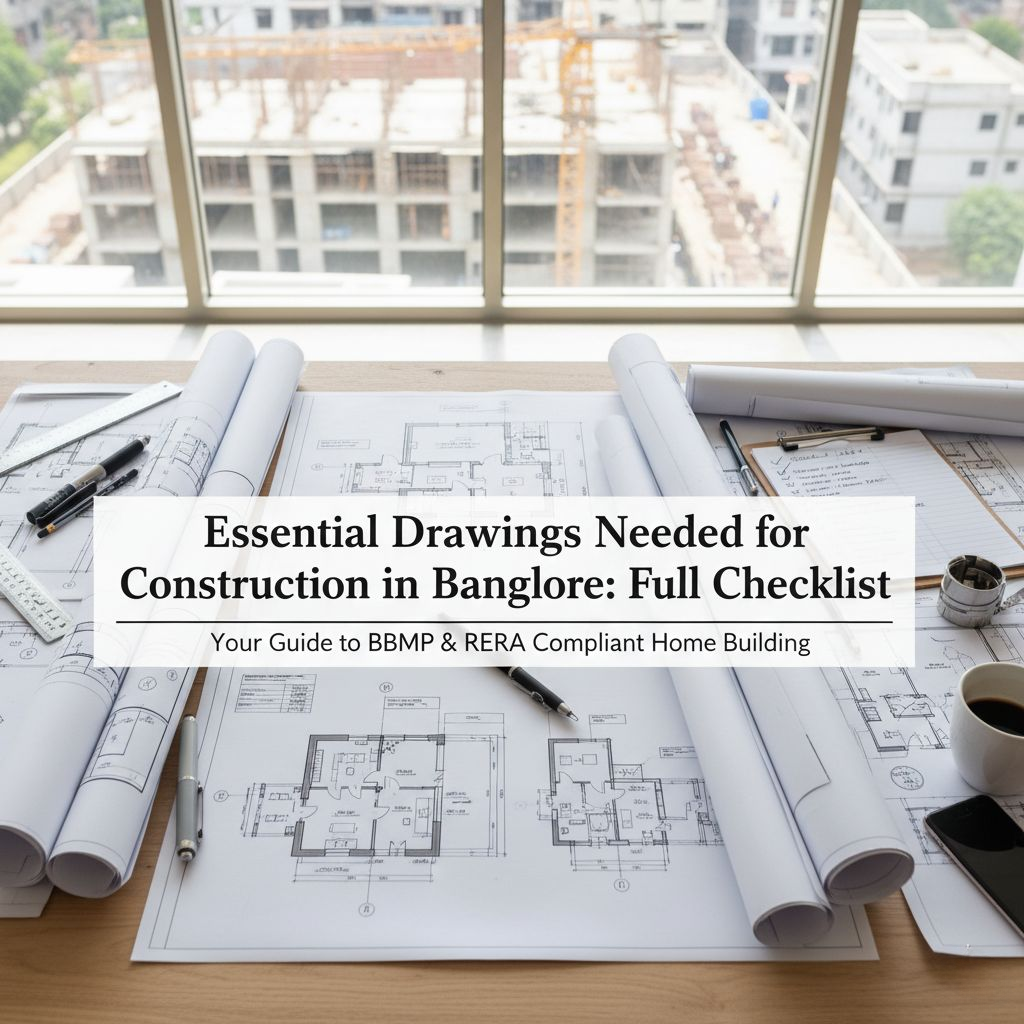
“Essential Drawings Needed for Construction in Bangalore: Full Checklist” Building a home in Bangalore requires far more than a beautiful design concept. The city follows strict building guidelines laid out by BBMP, BDA, BMRDA, Gram Panchayat, and the newly formed Greater Bengaluru Authority. To begin construction smoothly and avoid penalties or rework, homeowners must have a complete set of architectural, structural, and MEP (Mechanical, Electrical, Plumbing) drawings. These drawings act as the instruction manual for your entire house. They tell the contractor exactly what to build, where to build, and how to build—down to the last detail. Missing even a single crucial drawing can lead to construction delays, safety issues, approval rejection, or expensive redesigns. Introduction Building a home in Bangalore is a major dream for most families, but it is also a project that comes with technical steps, approval requirements, and detailed coordination. One of the most important parts of this entire journey is preparing a complete set of construction drawings, which ensure that your home is built exactly as planned—without confusion or errors on the site. In cities like Bengaluru, construction runs at a fast pace, and contractors often begin work quickly. But starting work without properly prepared drawings can cause serious problems—incorrect room sizes, misaligned columns, poor ventilation, drainage issues, or structural weakness. These mistakes usually get noticed only after construction progresses, when correcting them becomes difficult and costly. Government bodies such as BBMP, BDA, BMRDA, KUDA, Gram Panchayats, and the upcoming Greater Bengaluru Authority insist that builders follow approved bylaws, setbacks, FAR (Floor Area Ratio), parking requirements, and safety norms. These can only be adhered to when proper drawings are in place. This blog gives you a complete, easy-to-understand checklist of all essential construction drawings required in Bangalore. Whether you’re building on a 30×40, 40×60, duplex, villa, or a multi-floor home, this guide ensures you don’t miss any important document during planning or construction. Full Checklist of Drawings Required for Construction in Bangalore The drawings needed in a construction project are broadly grouped into Architectural, Structural, MEP, and Approval categories. Each has a unique role and is critical for different stages of construction. Architectural Drawings (Required for Approval + Execution) These drawings define the look, layout, and usability of your home. Floor Plans (All Floors) Room layout with dimensions Staircase location, wall thickness Door/window placements Site Plan / Key Plan Plot boundary lines Setbacks from roads North direction, road access lines Working Drawings Detailed room-wise measurements Alignment for beams, walls, and finishes Interior layout and tiled surfaces Section Drawings (Longitudinal & Cross) Floor-to-floor heights Slab thickness & roof slope Parapet height Elevations (Front, Rear, Side) Exterior look and facade details Window proportions, parapets, decorative elements Door & Window Schedule Sizes (width/height) Material (wood, aluminium, UPVC) Opening direction (inward/outward, sliding/pivot) Staircase Detail Drawings Riser / tread size Handrail height Headroom clearance Kitchen Layout Counter design / height Sink, hob, chimney duct locations Electrical & plumbing points Bathroom / Toilet Drawings Position of shower, WC, washbasin Drain slope, outlet positions Waterproofing detail Parking / Vehicle Layout Plan Designated parking spots Driveway / ramp alignment Clearance, turning radius Structural Drawings (Mandatory for Safety & Stability) These ensure the building can sustain loads, resist forces, and remain durable for decades. Column Layout Plan Exact location of each column Column size & section type Footing Plan & Foundation Drawings Type of foundation (isolated / combined / raft) Size and depth based on soil report Plinth Beam Layout Beam size and position Helps in load distribution RCC Slab Reinforcement Details Steel bar size, spacing, lap length Slab thickness Beam Reinforcement Drawing Longitudinal reinforcements Shear stirrups, bending schedules Roof / Roof Slab Layout Reinforcement for roof slab Provisions for water tanks, solar panels Staircase Structural Detailing Reinforcing bars Load transfer mechanism These drawings must be done by a licensed structural engineer, ensuring compliance with Indian Standards (IS) for safety and strength. MEP Drawings (Mechanical, Electrical & Plumbing) These drawings make sure your house is functional, connected, and efficient. Electrical Layout Points for lights, fans, switches Power lines for AC / Geyser / Inverter / UPS Distribution board location Water Supply / Plumbing Layout Cold / Hot water lines Pipe diameters, riser locations Tank, pump, and valve positions Sanitary / Drainage Layout Wastewater lines Inspection chambers / manholes Slope of drainage pipes HVAC / Ventilation Plan (if needed) Ducting for exhaust fans Vent design for bathrooms and kitchens Fire Safety Layout (for Multi-storey / Commercial) Fire exits, hoses, hydrants Fire alarm panels / extinguishers Rainwater Harvesting System Plan Location of recharge pits / sump Piping plan, overflow detail Lorem ipsum dolor sit amet, consectetur adipiscing elit. Ut elit tellus, luctus nec ullamcorper mattis, pulvinar dapibus leo. Approval Drawings for Local Authorities (BBMP / BDA / BMRDA) These are necessary for legal approvals and for starting construction officially. Submission Drawing Set Site plan + Key plan Floor plans (all levels) Elevations + Sections Area calculation sheet (FAR / FSI) Parking / Driveway plan Rainwater harvesting plan Fire safety plan (if applicable) Survey Plan Boundary verification Existing features (trees, wells, etc.) Soil Test Report Borelog details Soil bearing capacity Title Deed / Encumbrance Certificate Ownership document Legal proof for approval Why Every Drawing Is Important for Construction in Bangalore Having a comprehensive drawing set is not just good practice — it’s critical in Bangalore’s fast-paced construction environment. Here’s why: Legal Compliance: Local authorities like BBMP, BDA, and BMRDA strictly check for FAR, building height, setback violations, and parking space. Without proper drawings, your application may be rejected or delayed. Safety: Structural drawings ensure that your building can withstand daily loads (furniture, people) and environmental forces (wind, occasional tremors). Cost Efficiency: With detailed working drawings, contractors can estimate exact quantities and avoid over-ordering or rework; this can save 10–20% of material costs. Clarity on Site: Masons, plumbers, electricians, and finishers can refer to the working drawings for exact placements, reducing confusion or on-the-spot guessing. Durability: Proper reinforcement and drainage planning reduce future issues like cracks, leaks,

“How to Optimize Space in Small and Mid-Size Bangalore Plots”
House Plan

“How to Optimize Space in Small and Mid-Size Bangalore Plots”

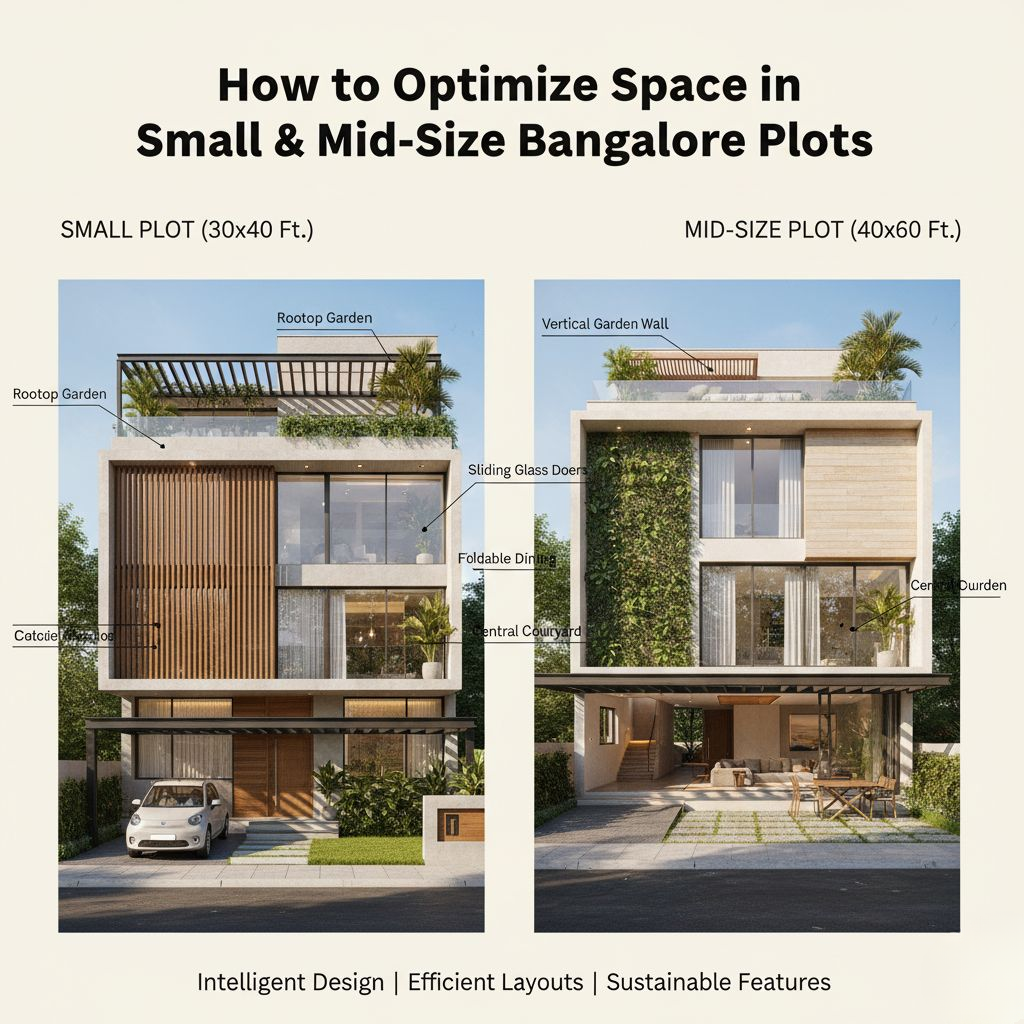
How to Optimize Space in Small and Mid-Size Bangalore Plots How to Optimize Space in Small and Mid-Size Bangalore Plots Designing a home on a compact 20×30, 30×40, or even a mid-sized 40×60 plot in Bangalore might feel challenging — but with the right design approach, these plots offer incredible possibilities. As land prices rise and zoning restrictions evolve across BBMP, BDA, and BMRDA-regulated areas, Bengaluru homeowners are increasingly looking for smart space optimization to make their homes feel spacious, functional, modern, and future-ready. Whether you’re constructing a duplex on a 30×40 site or planning a rental floor on a 20×30 plot, the key to maximizing utility lies in strategic planning, seamless circulation, and clutter-free interiors. A well-designed home doesn’t depend on the size of the plot; it depends on how efficiently every inch is used. With the right architectural methods — such as skylights, open floor concepts, vertical expansion, multi-purpose furniture, smart storage, and Vastu-aligned zoning — even smaller plots can look premium and luxurious. In this guide, we break down practical, high-impact techniques used across Bengaluru to help homeowners optimize space effectively, improve ventilation, enhance natural lighting, and create homes that feel far larger than their floor area. Why Space Optimization Matters for Bangalore Homes Bengaluru’s rapid urban development has led to a rise in compact plots across major localities. More than 70% of new residential constructions happen on 20×30 and 30×40 sites, especially in areas like Thanisandra, Hennur Cross, Yelahanka, Whitefield, KR Puram, Bannerghatta Road, and Sarjapur Road. The demand for independent homes remains high, but plot sizes have reduced drastically. Compounding this, BBMP setback rules, FAR limitations, and parking requirements reduce the usable footprint further. Homeowners must therefore focus on: Efficient zoning Natural ventilation Vertical planning Minimal corridor wastage Multi-functional rooms Intelligent furniture layouts Light-enhancing materials Space optimization not only improves comfort but also boosts property value, rental potential, and long-term usability. A well-designed home on a 20×30 or 30×40 site can match — and sometimes surpass — the functionality of larger plots. Plot-Wise Strategies for 20×30, 30×40 & 40×60 Sites Key 2025 Trends in Space-Efficient Home Design Bangalore homeowners in 2025 prefer designs that balance modern aesthetics with maximum usability. Some top trends include: 1. Open-Concept Living Removing unnecessary partitions creates a visually bigger space. 2. Double-Height Living Areas Makes the home feel luxurious even in a small plot. 3. Skylights & Ventilation Cut-Outs Extremely effective in densely packed Bengaluru layouts. 4. Multi-Functional Furniture Foldable, sliding, or convertible furniture saves room. 5. Wall-Mounted Storage Improves floor space and reduces clutter. 6. Vertical Planning (G+2, G+3) Essential for maximizing usable area on compact plots. 7. Large Windows & French Doors Allow maximum daylight and help rooms look larger. What’s Unique About Designing for Bangalore’s Layouts? Bangalore’s planning challenges make space optimization essential: 1. Narrow Roads & Short Frontage Plots often face narrow streets, making natural light planning crucial. 2. High-Density Neighbourhoods Neighbouring buildings block side ventilation—skylights become vital. 3. Vastu Preferences Most homeowners expect Vastu-aligned solutions, which influence room placement. 4. Rental Floor Demand Many homeowners plan for rental units to reduce loan burden. 5. Climate Advantage Bangalore’s mild temperature supports large windows and open designs. Because of these factors, smart zoning, airflow planning, and light distribution play a huge role in Bangalore home design. Materials & Finishes That Make Small Homes Look Bigger Choosing the right materials can instantly increase the perceived space. Recommended Materials (2025): Large-format tiles (800×1600 or 1000×2000 mm) to reduce grout lines White, beige, or grey laminates for brighter interiors Glass partitions to maintain openness Mirrors to create visual expansion PU/laminate wardrobes with handle-less finishes Cove lighting + LED strips for a seamless look Micro-concrete flooring for a minimal aesthetic These finishes add brightness, minimalism, and elegance—perfect for small and mid-size Bengaluru homes. Lorem ipsum dolor sit amet, consectetur adipiscing elit. Ut elit tellus, luctus nec ullamcorper mattis, pulvinar dapibus leo. Popular Bangalore Localities With Small & Mid-Size Plots Areas dominated by compact plots: Hennur Cross Thanisandra Yelahanka KR Puram Whitefield Horamavu Electronic City Sarjapur Road Bannerghatta Road Nelamangala Anekal JP Nagar (some extensions) Understanding locality-specific FAR, road width, and zoning helps in maximizing space efficiently. Cost Guide (2025) Here are updated 2025 cost estimates for space-optimized homes: Architectural design: ₹35–₹60 per sq ft Civil construction: ₹1,800–₹2,600 per sq ft Premium interiors: ₹500–₹1,500 per sq ft Skylight installations: ₹25,000–₹75,000 Custom staircase: ₹50,000–₹1.2 lakh Modular kitchen + storage: ₹1 lakh–₹4 lakh Large windows/French doors: ₹35,000+ Smart planning delivers long-term savings by reducing layout mistakes and material wastage. How to Hire the Right Architect for Compact Plot Homes Look for an architect who:✔ Has experience designing in 20×30, 30×40, and 40×60 plots✔ Understands BBMP/BDA guidelines✔ Balances aesthetics and functionality✔ Provides detailed 3D visualizations✔ Follows Vastu while maintaining modern design✔ Offers structural + MEP coordination✔ Designs with future expansion in mind A skilled architect can make even a 600 sq ft plot feel luxurious. Buildarch Case Study: Vijay Kumar – Hennur Cross Project Link: https://buildarch.co/portfolio/vijay-kumar-hennur-cross/ Plot Size: 40×50 Client Requirement: 3BHK feel in a compact footprint Maximum natural light Vastu-compliant layout Premium interiors without clutter Buildarch Solutions: Added a skylight above the staircase to brighten the entire house Used open-concept living + dining Provided storage under the staircase Designed light-toned interiors with glass and mirrors Created a balcony for ventilation at the rear Modern elevation with vertical elements Outcome: A compact 600 sq ft plot transformed into a spacious, well-lit, premium home with excellent circulation and long-term usability — optimized to perfection. FAQs: Space Optimization in Small & Mid-Size Bangalore Plots How can I make a 30×40 or 40×60 home feel more spacious? To make compact Bangalore homes feel bigger, focus on unobstructed visual flow. Combine your living–dining–kitchen areas into an open plan, use full-height windows to draw in daylight, and opt for wall-mounted or foldable furniture. Mirrors, sliding doors, and light-toned interior finishes also create the illusion of added space. Smart planning can easily make a 30×40 or even a 20×30 home

Modern House Planning for Today’s Bengaluru Lifestyle
House Plan

“Top 10 Modern House Plan Ideas for Bangalore Homes (With LayoutTips)”

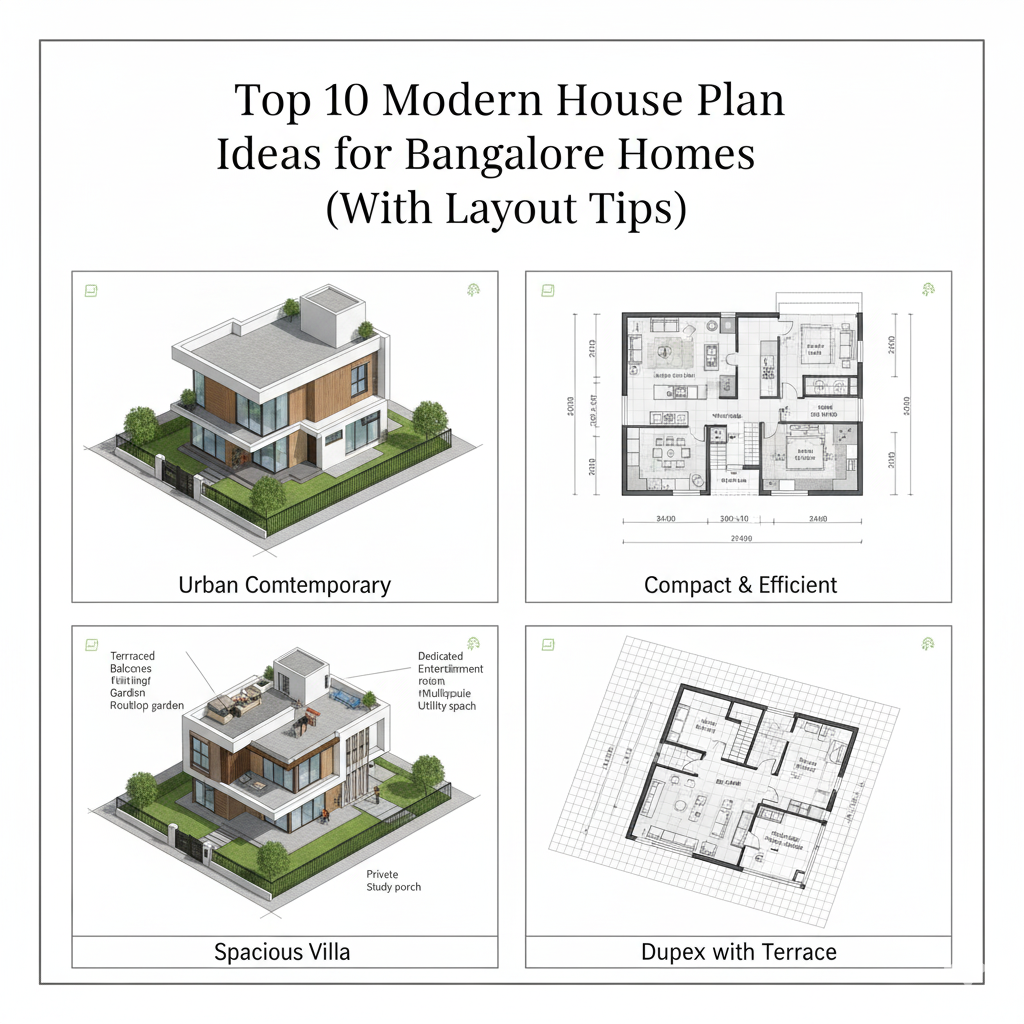
Top 10 Modern House Plan Ideas for Bangalore Homes (With Layout Tips) Modern House Planning for Today’s Bengaluru Lifestyle Bengaluru’s fast-growing urban landscape has transformed the way homeowners think about designing their dream houses. With rising land costs, compact plots, and a demand for functional-yet-stylish spaces, modern house plans today focus on space optimisation, natural light, sustainability, and smart living. Whether you own a 30×40, 40×60, or a custom plot, the right house plan can make your home feel spacious, elegant, and future-ready. Modern Bangalore families look for multi-purpose rooms, smart layouts, eco-friendly materials, and Vastu-aligned designs without compromising on aesthetics. This blog brings you the Top 10 Modern House Plan Ideas curated specifically for Bangalore’s climate, lifestyle, and urban constraints—along with practical layout tips that help you plan efficiently. Whether you’re building a new villa, duplex, or rental-based house, these design ideas will help you create a home that is beautiful, functional, and built for long-term comfort. Open-Concept Living + Dining Layout Why It Works in Bengaluru Creates better airflow and natural lighting. Makes compact homes feel spacious. Layout Tip Place the living area facing the main road and dining towards the rear for better privacy and Vastu alignment. 3-Bedroom Flexible Layout with a Multi-Purpose Room Ideal For: Work-from-home families, joint families, or those needing extra storage. Layout Tip Convert the extra room into: Home office Kids’ study area Guest bedroom Entertainment room Modern Duplex Home Plan (1.5 or 2 Floors) Duplex homes are becoming a trend in areas like JP Nagar, RR Nagar, Yelahanka, and Sarjapur. Benefits Visual connection between floors Excellent for ventilation Offers premium villa-like feel even on a 30×40 plot Layout Tip Place the staircase near the living room for better circulation and access. Compact 2BHK Ground Floor Plan for Rental-Based Homes Many Bangalore homeowners prefer building rental homes on upper floors. Plan Idea Ground floor: 2BHK for owner First & Second floor: 1BHK or 2BHK rentalsThis setup ensures long-term passive income. Layout Tip Keep separate stair access for tenants for maximum privacy. Modern Minimalist Villa Plan (Large 40×60 Plots) Features Floor-to-ceiling windows Private courtyard Double-height living room Layout Tip Add a skylight above the staircase or living room for stunning natural light. Terrace Garden + Semi-Open Family Area With Bengaluru’s pleasant weather, terrace spaces are a big hit. Plan Idea Semi-open seating Pergola roof Garden with creepers & planters BBQ nook Layout Tip Use lightweight steel or wooden pergolas for shade without blocking skylight. Modern Kitchen + Utility Combo Plan Space-efficient kitchens are crucial in Bangalore. Must-Have Features L-shaped or U-shaped layout Utility for laundry/washing Breakfast counter Tall pantry unit Layout Tip Place the utility area behind the kitchen with a separate exit door for convenience. Vastu-Compliant Modern House Plan Many Bengaluru families prefer Vastu-aligned designs. Basics for Vastu Layouts Kitchen in SE Master bedroom in SW Puja room in NE Living room in North/East Layout Tip Opt for subtle Vastu corrections if plot orientation is irregular. Parking + Storage-Optimised Ground Floor Plan Given the narrow plot sizes, smart parking layouts are essential. Plan Idea One-car parking Separate two-wheeler space Built-in storage under the staircase Electrical room + UPS area Layout Tip Use sliding gates instead of swing gates to save space. Modern 4BHK Plan with Private Lounge For premium plots (40×60 & above), luxury features are preferred. Features Private lounge on the first floor Large master bedroom with walk-in wardrobe Acoustic-designed home theatre Layout Tip Keep the lounge towards the rear for a peaceful, noise-free experience. Top Planning Tips for Bangalore Homes (2025) 1. Maximise Natural Light Use large windows, skylights, and ventilators to reduce electricity usage. 2. Plan for Future Expansion Design columns and load-bearing points for adding new floors. 3. Use Weather-Friendly Materials Moisture-resistant paintsAnti-skid tilesConcrete-based compound walls 4. Smart Home Integration Install wiring provision for: CCTV Smart switches Wi-Fi-enabled lighting 5. Rainwater Harvesting Layout BBMP-approved drainage linesRecharge pitsSump positioning Plot-Wise Layout Recommendations For 30×40 Plots Ideal build-up: G+2 or G+3 Best layouts: Duplex + rentals Maximise staircase & parking usage For 40×60 Plots Ideal build-up: G+1 or G+2 Villa Best layouts: Courtyard + double-height hall Add a garden on the front or rear Cost Guide for Planning Modern Homes in Bangalore Basic house construction: ₹1,800 – ₹2,000/sq ft Premium finish: ₹2,300 – ₹2,800/sq ft Luxury villa finish: ₹3,000 – ₹4,500/sq ft Architectural planning fees: ₹25,000 – ₹1,00,000 Structural design: ₹12–20/sq ft (Project-specific variations apply) Frequently Asked Questions What is the best house plan for a 30×40 plot in Bangalore? A combination of 2BHK owner unit + rental units or a duplex home works best due to space efficiency and better future value. Are modern house plans Vastu-compatible? Yes. Most architects design modern layouts that follow Vastu guidelines while maintaining aesthetics and open layouts. How much does it cost to construct a modern home in Bangalore? On average, costs range between ₹1,800 to ₹3,500 per sq ft, depending on the materials and finishes. Can I include a home office room in a compact plot? Absolutely. Multi-purpose rooms and modular furniture help you comfortably integrate a work-from-home space even in smaller layouts. A combination of 2BHK owner unit + rental units or a duplex home works best due to space efficiency and better future value. Yes. Most architects design modern layouts that follow Vastu guidelines while maintaining aesthetics and open layouts. On average, costs range between ₹1,800 to ₹3,500 per sq ft, depending on the materials and finishes. Absolutely. Multi-purpose rooms and modular furniture help you comfortably integrate a work-from-home space even in smaller layouts. Conclusion Modern house planning in Bangalore is all about balancing function, beauty, budget, and future needs. Whether you dream of a compact 2BHK, a premium duplex, or a luxury villa, the right plan ensures smart space utilisation, better comfort, and long-term value. If you want a personalised 30×40 or 40×60 house plan, floor layouts, 3D designs, or complete construction support— 📞 Call/WhatsApp: 8905123455 I can also generate custom plans instantly if you need.

BBMP Building Plan Approval Process: A Simple Guide for New Home Builders
House Plan

BBMP Building Plan Approval Process: A Simple Guide for New Home Builders

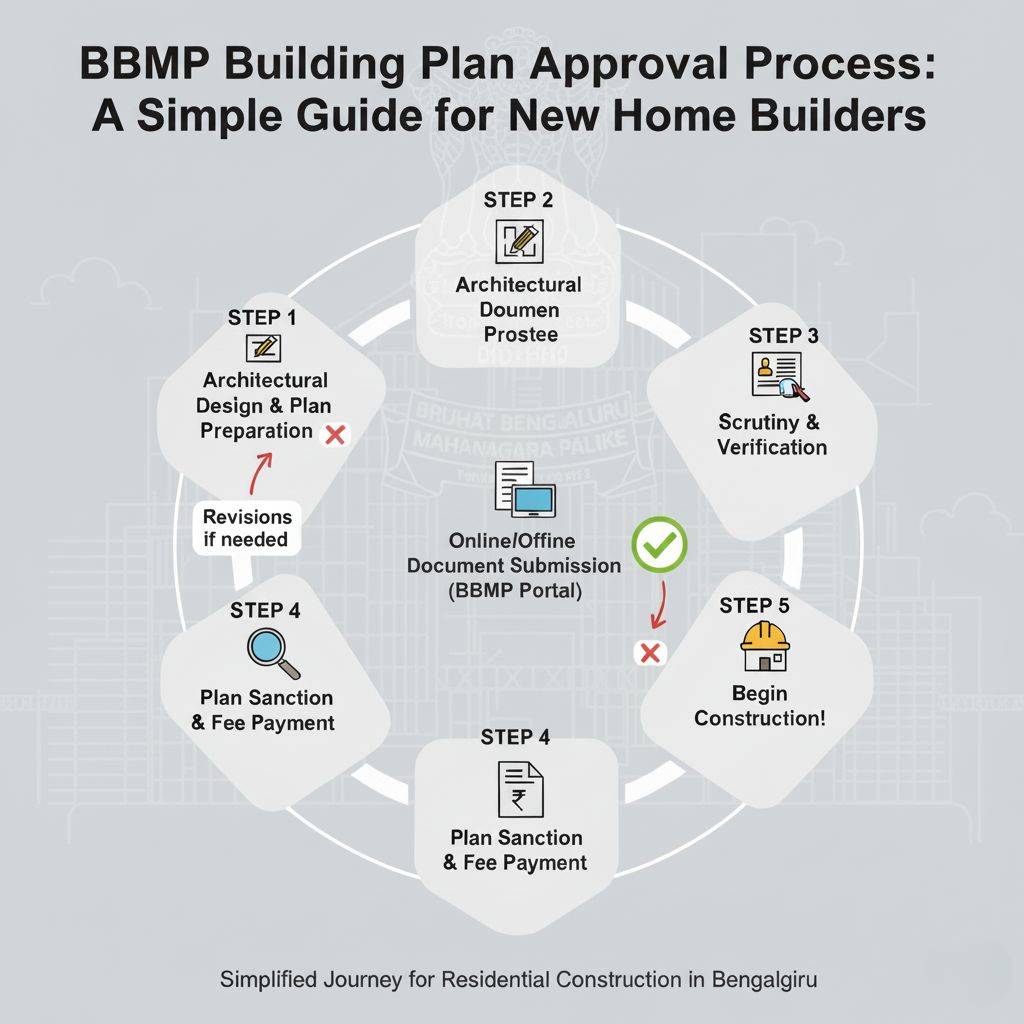
BBMP Building Plan Approval Process: A Simple Guide for New Home Builders The First Step Every Bengaluru Home Builder Must Take Building your dream home in Bengaluru—whether on a 20×30, 30×40, or 40×60 site—starts long before the first brick is laid. The true foundation is the BBMP Building Plan Approval, a legal and mandatory step for any new construction within BBMP limits. For many first-time home builders, terms like FAR, setbacks, Khata, and AutoDCR feel confusing. Add to that multiple documents, online uploads, inspections, and fees—and the process can seem overwhelming. But here’s the truth: BBMP plan approval is far simpler today than ever before, thanks to the digital BPA (Building Plan Approval) system. With the right guidance and proper documentation, most approvals move smoothly within 20–35 days. This guide breaks down the entire process in a clean, step-by-step format, helping you understand what BBMP expects, how architects submit drawings, what documents you need, and how much you will spend. If you’re planning to construct a house in Bengaluru in 2025, this blog will help you avoid delays, penalties, and costly mistakes—ensuring your project starts on a strong, legal foundation. Why BBMP Plan Approval Matters Bengaluru’s real estate ecosystem is stricter than ever. With increasing focus on urban planning, zoning control, and safety, BBMP has strengthened its guidelines to ensure buildings adhere to: Proper FAR usage Accurate setbacks Fire and structural safety Road width regulations Environmental compliance In 2025, unauthorized construction is monitored closely with satellite mapping, local inspections, and citizen complaints via the BBMP Sahaaya app. Owners building without approval risk: Demolition notices Heavy penalties No water/electricity connections Difficulty selling or renting property Legal cases or property disputes A sanctioned BBMP plan is your legal protection, ensuring your home is safe, compliant, and future-proof. Key Elements of BBMP Building Plan Approval Before understanding the process, it’s important to know the key parameters BBMP checks. 1. FAR (Floor Area Ratio) Defines how much you can build based on plot size and road width. 2. Setbacks Required open space around your building—varies for 20×30, 30×40, 40×60 sites. 3. Khata Your property account; must be updated and in your name. 4. Zoning Whether your plot falls under residential, mixed residential, or commercial zones. 5. Structural Safety Mandatory certification by a licensed structural engineer. Understanding these ensures your design meets BBMP rules from day one. What’s Unique About BBMP Approval for Bengaluru Home Builders BBMP approval differs from other authorities like BDA, BIAPPA, or Panchayat because: The system is fully online (AutoDCR + BPA). Only registered architects can upload plans. Strict scrutiny of FAR and setback compliance. Road width is verified independently by BBMP inspectors. Digitally signed sanction plans are issued. All payments are online—no manual receipts. BBMP also rejects plans created by unauthorized draftsmen, which is a common reason applications get delayed or dismissed. Step-by-Step BBMP Approval Process Step 1: Appoint a BBMP-Licensed Architect Your architect prepares: Concept plan Architectural drawings FAR calculation Setback compliance Digital CAD drawings for AutoDCR BBMP only accepts submissions from licensed engineers/architects. Step 2: Gather All Required Documents Here is the complete checklist: Property Documents Latest Khata Certificate & Extract Latest Tax Paid Receipt Sale Deed / Gift Deed / Partition Deed Encumbrance Certificate (EC) Mother deed (if required) Technical Documents Proposed building plan Architect’s License Copy Structural Stability Certificate Soil test (for G+3 and above) Other Documents Site photographs Existing building details (if extension) NOCs (Only if applicable) Fire NOC Airport height clearance High tension line NOC Environmental clearance (large plots) Step 3: AutoDCR Upload Your architect uploads drawings to the BBMP AutoDCR system.The system checks: FAR Setbacks Building height Zoning rules If errors are detected, drawings must be revised before moving forward. Step 4: BBMP Officer Verification BBMP officials verify your: Documents Property details Ownership Road width Site condition If clarification is needed, they send a query via the portal. Step 5: BBMP Site Inspection A junior engineer visits the site to confirm: Site measurements Coordinates No illegal construction Correct road width This step is crucial—any mismatch between the sale deed and actual measurement delays approval. Step 6: Pay Approval Fees These include: Licence fee Betterment charges (if applicable) Scrutiny fee Impact fee (for additional floors) All payments are made online. Step 7: Final Approval Once cleared, BBMP issues: Sanctioned Building Plan Building Licence PR Card (Permission Registry) You can now legally begin construction. BBMP Plan Approval Cost Guide 2025 For residential properties, approximate charges are: Plot Size Typical Range 20×30 (600 sq ft) ₹25,000–₹45,000 30×40 (1200 sq ft) ₹35,000–₹65,000 40×60 (2400 sq ft) ₹50,000–₹1,20,000 G+2 / G+3 Homes ₹80,000–₹2,00,000+ Costs depend on: Zone Road width Number of floors FAR usage Betterment charges Common Mistakes New Home Builders Should Avoid 1. Not Hiring a Licensed Architect BBMP rejects all drawings uploaded by unregistered draftsmen. 2. Incorrect Setbacks Many builders reduce setbacks to increase room sizes—this leads to rejection. 3. Wrong Road Width Mentioned BBMP verifies road width independently. 4. Using Old Khata or Tax Receipts Documents must be updated at the time of submission. 5. Not Matching Sale Deed Dimensions Sale deed size must match the site on ground. 6. Uploading Incomplete Drawings BBMP requires elevation, section, foundation, and floor plans. 7. Starting Construction Without Approval This attracts penalties and demolition risk. FAQs: BBMP Building Plan Approval How long does the BBMP plan approval process take? The average approval timeline is 20–35 days, depending on document completeness, site inspection scheduling, and officer verification. Delays usually happen due to missing documents or incorrect site measurements. Can I apply for BBMP approval without an architect? No. Only a BBMP-licensed architect or engineer can upload drawings through the AutoDCR/BPA portal. Self-submission is not allowed. Do I need BBMP approval for adding an extra floor? Yes. Whether you are adding a floor, modifying your elevation, or extending the building, a revised plan approval is mandatory. What happens if I start construction without BBMP approval? BBMP can issue penalties, stop-work notices, and even order demolition for major violations. Utility

How to Choose the Right House Plan for a 30x40 or 40x60 Plot in Bangalore
House Plan

How to Choose the Right House Plan for a 30×40 or 40×60 Plot in Bangalore

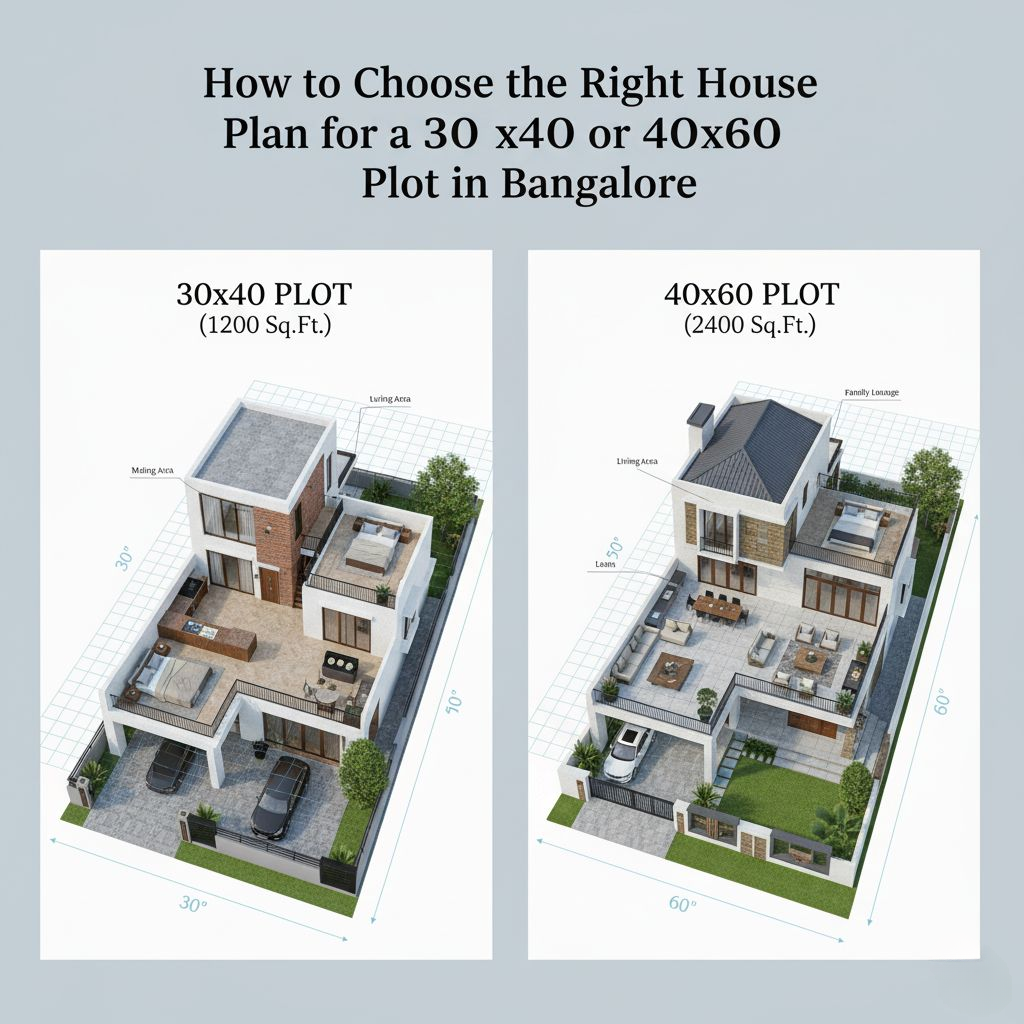
How to Choose the Right House Plan for a 30×40 or 40×60 Plot in Bangalore How to Choose the Right House Plan for a 30×40 or 40×60 Plot in Bangalore Choosing the right house plan for a 30×40 (1200 sq ft) or 40×60 (2400 sq ft) plot in Bangalore is one of the most important stages in home-building. A well-planned layout determines not only how comfortable your home feels but also its long-term functionality, ventilation, Vaastu alignment, safety, and resale value. In a city like Bangalore, where land prices are rising and neighborhoods are becoming increasingly dense, a thoughtfully designed floor plan ensures that every square foot of your plot is used intelligently. From zoning and room placement to setback requirements and BBMP regulations, house planning in Bangalore needs a customized approach. Homeowners today also prefer flexible layouts that support modern living—like home offices, private balconies, natural ventilation, indoor courtyards, and future expansion possibilities. Whether you’re planning a duplex home, a rental unit setup, or a spacious premium residence, the right plan helps you achieve the perfect balance of aesthetics, practicality, and comfort. This guide explains everything you need to know to select the best layout for 30×40 and 40×60 sites—including trending plan ideas, cost considerations, design principles, local rules, and how Build Arch helps homeowners create intelligent, modern, and future-ready homes. Why Choosing the Right House Plan Matters for Bengaluru Homes The year 2025 has brought major shifts in how Bengaluru residents think about home design. The demand for functional, multi-purpose spaces has grown rapidly. With hybrid work culture becoming permanent, most homeowners now require a dedicated study room or home office. Families also look for private balconies, better ventilation, green corners, and rental floors that generate passive income. Additionally, Bengaluru’s growing traffic and noise levels have made strategically planned layouts more important than ever—especially those that allow natural ventilation, reduce heat gain, and ensure privacy. Mistakes in planning can lead to poorly lit interiors, frequent renovation needs, low resale value, and structural complications in future expansions. Due to FAR (Floor Area Ratio) rules, BBMP regulations, and different road widths across neighborhoods, planning needs to be done accurately from the start. The right plan ensures your home remains practical, efficient, Vaastu-aligned, legally compliant, and adaptable to future lifestyle needs. Key 2025 Trends in House Planning for 30×40 & 40×60 Sites 1. Open Living + Dining Layouts These enhance cross ventilation and make the home appear larger—especially essential for 30×40 plots. 2. Multi-Functional Rooms Guest rooms that convert into home offices or gym spaces. 3. Internal Courtyards & Skylights These bring natural light into dense neighborhoods. 4. Vaastu-Aligned Zoning Kitchen in SE, bedrooms in SW, and living rooms facing East or North. 5. Separate Rental Units Many homeowners prefer a G+2 layout where upper floors are rented for income. 6. Sustainable Design Elements Solar provisions, water harvesting, and natural materials are becoming standard. 7. Premium Front Elevations Minimalist facades with natural stone, wooden textures, and glass railing balconies. What’s Unique About House Planning in Bangalore? Climate-Sensitive Planning Placement of openings matters because Bengaluru’s west-facing sun can create heat pockets. East and North openings ensure natural daylight without overheating. BBMP & BDA Regulations Setbacks, building heights, FAR, parking norms, and electrical room provisions directly affect house planning. Lifestyle Preferences Ground-floor bedroom for elderly parents Terrace garden for leisure Closed puja room for privacy Utility area next to kitchen Traffic & Noise Considerations Homes near main roads require strategic window placement to reduce noise. Materials & Finishes Popular in 2025 for Bangalore Homes Flooring Options Premium vitrified tiles Wooden laminate for bedrooms Natural granite for steps and outdoor spaces Wall Finishes Texture paints Italian finishes for premium interiors Weather-proof coatings for exteriors False Ceiling Trends Gypsum ceilings with LED strip lighting Wooden rafters for warm aesthetics Windows & Doors UPVC soundproof windows Solid hardwood doors These materials enhance durability and help maintain indoor comfort. Popular Bengaluru Localities Choosing 30×40 & 40×60 House Plans These plot sizes are extremely common in: HSR Layout JP Nagar BTM Layout Bannerghatta Road Sarjapur Road Electronic City Uttarahalli RR Nagar Whitefield Yelahanka Each locality has its own FAR limits and road-width constraints that influence house planning. Cost Guide: 2025 House Plan & Construction Cost in Bangalore Designing the perfect house plan for a 30×40 or 40×60 plot in Bangalore requires understanding the elements that influence planning, materials, and structural decisions. Although costs vary across architects and contractors, homeowners can make informed decisions by knowing what affects planning budgets and how to manage them effectively. Factors That Influence House Plan Costs Built-Up Area & Number of Floors G+1 homes require moderate structural support G+2 or G+3 require more reinforcement Duplexes and rental units add more complexity More floors = more planning + more structural detailing. Architectural & Structural Complexity Features that influence costs without fixed numbers: Skylights or double-height spaces Cantilever projections Large windows Modern elevations Smart home wiring Simpler layouts remain more economical. Soil Conditions Across Bangalore Soil type affects foundation, steel consumption, and column strength.Examples: Red soil (HSR, Sarjapur) Hard soil (Yelahanka, Hebbal) Mixed soil (Kengeri, KR Puram) Material Choices Your materials determine durability, maintenance, and long-term value: Block vs brick Cement grade Door/window frames Flooring type Electrical/plumbing brands Vastu Requirements Adjustments may include: Kitchen placement Bedroom direction Staircase positioning Window orientation Strict vastu requires extra design revisions. BBMP/BDA Regulations Approvals impact planning timelines based on: FAR usage Setback rules Height restrictions Parking provisions Alignment with regulations avoids rework.  Cost Behavior: 30×40 vs 40×60 (General Insight) Plot Size Cost Behavior Why 30×40 Higher efficiency planning required Compact space needs smarter design 40×60 Larger built-up area may increase material usage More rooms, more detailing How to Hire the Right Designer in Bangalore Choose a designer based on: Experience with Bangalore zoning rules Vastu expertise 3D design clarity Project timeline efficiency Transparent communication FAQ Section Which is better for a family—30×40 or 40×60? Both work well, but 40×60 offers more space for future expansion. Can I build

Scroll to Top