Build Arch- Home Interiors in Hennur

Build Arch- Home Interiors in Hennur
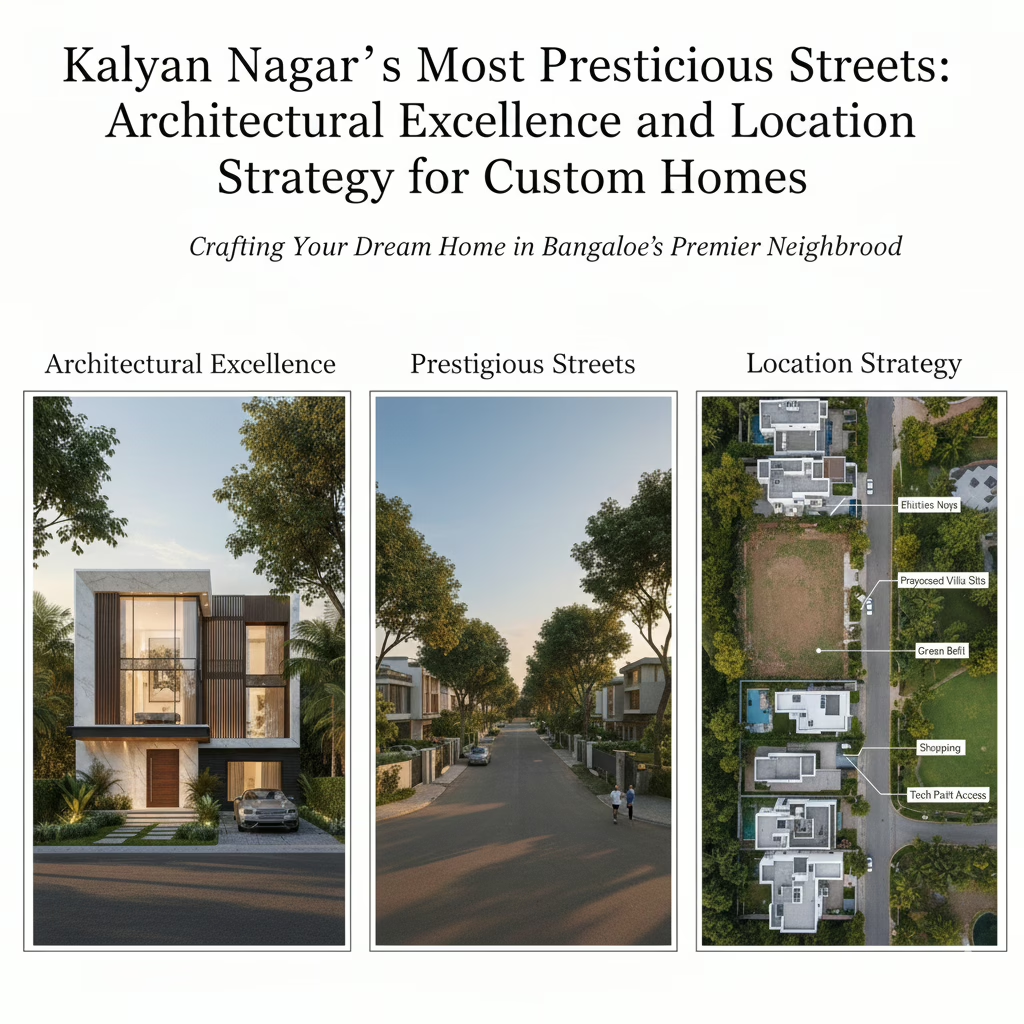
Kalyan Nagar has emerged as one of North Bangalore’s most refined residential pockets—not through high-rise density or gated developments, but through a steady evolution of independent, architect-designed homes. What distinguishes Kalyan Nagar from other luxury neighborhoods is that prestige here is not announced loudly; it is expressed through street character, plot planning, and architectural restraint.
For homeowners planning custom homes in Kalyan Nagar, choosing the right street is as critical as choosing the right architect. Orientation, road width, surrounding built form, zoning clarity, and long-term neighborhood stability all influence how a home can be designed—and how it will perform as a lifestyle asset.
This blog explores Kalyan Nagar’s most prestigious residential streets, how architecture responds to these micro-locations, and why location strategy plays a decisive role in successful custom home design.
Unlike master-planned layouts, Kalyan Nagar is defined by micro-neighborhoods. Two plots just a few streets apart can offer vastly different architectural possibilities.
Prestige in Kalyan Nagar is shaped by:
Low commercial intrusion
Consistent residential setbacks
Tree-lined internal roads
Controlled traffic flow
Established independent home fabric
For architects, these conditions create the freedom to design homes that prioritize privacy, daylight, ventilation, and facade expression—without defensive planning.
Custom homes in premium streets feel calmer, age better, and command higher long-term value because the surrounding environment supports architectural intent.
The most sought-after streets in Kalyan Nagar are interior residential roads, set away from arterial traffic. These streets are typically quieter, greener, and visually cohesive.
Architecturally, such streets allow:
Larger window openings without privacy compromise
Courtyard planning and inward-looking spaces
Open balconies and terraces facing the street
Subtle yet refined facade articulation
Homes on these streets often follow a language of understated luxury—natural materials, layered elevations, and restrained lighting rather than flashy exteriors.
Why architects prefer interior streets:
Better acoustic comfort
Stable residential zoning
Predictable neighbor scale
Long-term neighborhood character
For homeowners, these streets offer the rare combination of urban accessibility and residential calm.
Certain wide roads and corner plots in Kalyan Nagar are considered premium due to frontage advantages and architectural visibility. When designed well, these plots can host striking contemporary homes that become reference points within the neighborhood.
Corner plots allow:
Dual frontage and better ventilation
Flexible entry and parking strategies
Stronger facade presence
Clear zoning separation between public and private areas
However, architectural discipline is critical. Without thoughtful planning, visibility can compromise privacy. Successful custom homes on such plots use:
Layered screens
Recessed balconies
Vertical fins and jaalis
Strategic landscaping
Architect-led design ensures the home stands out for its elegance—not excess.
Prestige is often reinforced by contextual harmony. Streets dominated by independent villas and architect-designed homes tend to retain value better than mixed-use stretches.
From an architectural perspective, these streets allow:
Consistent building heights
Predictable shadow and setback conditions
Cleaner skyline and street rhythm
Custom homes designed here often take cues from surrounding scale while introducing modern interpretation—creating continuity without imitation.
Benefits of such streets:
Higher resale perception
Strong neighborhood identity
Reduced risk of commercial conversion
Better civic maintenance over time
For long-term homeowners, this stability is invaluable.
Prestigious streets in Kalyan Nagar share certain architectural traits—not imposed by regulation, but by collective design maturity.
Common characteristics include:
Contemporary tropical architecture
Emphasis on horizontal lines and depth
Neutral, earthy material palettes
Facades designed for Bangalore’s climate
Landscaped setbacks and entrance courts
Rather than loud statements, homes here express confidence through proportion, detailing, and material quality.
This environment encourages architects to focus on refinement rather than novelty.
Before design begins, experienced architects analyze the street as carefully as the plot itself.
Key evaluation parameters include:
Road width and traffic behavior
Orientation and solar exposure
Neighboring building heights
Tree cover and existing vegetation
Zoning stability and future risk
At BuildArch, location strategy is a foundational step. The design response for a quiet interior street differs significantly from that of a wide road or corner plot—even within the same neighborhood.
This strategic approach ensures the home fits naturally into its context while maximizing comfort and long-term value.
In Kalyan Nagar, the relationship between budget, architecture, and street selection is deeply interconnected. While many homeowners initially focus on plot size or built-up area, experienced architects understand that the street itself quietly dictates design decisions, construction costs, and long-term value.
Choosing the right street can simplify architectural execution, reduce unnecessary expenses, and significantly improve return on investment. Conversely, ignoring street dynamics often leads to over-engineered solutions that inflate budgets without adding meaningful value.
Homes located on calm interior streets typically allow architects to design with greater freedom and efficiency. Because privacy concerns are lower and traffic movement is minimal, architectural solutions can remain elegant rather than defensive.
From a budget perspective, these streets often:
Reduce the need for high boundary walls and heavy screening
Allow simpler facade articulation without compromising privacy
Enable larger openings for daylight and ventilation, reducing lighting and cooling loads
Support inward-looking courtyard planning, which improves thermal comfort naturally
As a result, homeowners can allocate more budget toward materials, interiors, and spatial quality rather than security-driven construction.
Over time, such homes also benefit from lower maintenance costs and stronger livability, enhancing both emotional and financial ROI.
Wide roads and prominent streets introduce a different architectural equation. While these locations offer visibility and status, they also demand a more nuanced design approach to protect privacy and acoustic comfort.
Architectural responses here often include:
Layered facades with depth and articulation
Architectural screens, fins, and recessed balconies
Advanced glazing systems for noise and heat control
Strategic landscaping to soften the street edge
These elements inevitably influence the budget. However, when planned early, they become intentional design investments rather than reactive costs.
Well-designed homes on such streets often enjoy:
Stronger street presence
Higher brand value of the property
Better resale appeal due to visibility and accessibility
The key lies in aligning budget allocation with architectural intent—spending where it enhances both experience and long-term worth.
Corner plots in Kalyan Nagar are among the most valuable, yet they are also the most complex from a design and budgeting standpoint. Dual frontage introduces exposure, which can be both an asset and a liability.
Architecturally, corner plots require:
Careful zoning of public and private spaces
Dual facade treatment with consistent design language
Enhanced boundary articulation
Thoughtful placement of openings to avoid visual intrusion
From a budget perspective, corner homes may require additional investment in facade detailing and structural planning. However, when executed well, they deliver exceptional ROI due to their prominence and perceived prestige.
Architect-led planning ensures that added costs translate into architectural value rather than superficial embellishment.
One of the most overlooked aspects of budgeting is future street evolution. Streets with stable residential zoning and consistent independent homes protect architectural investments over time.
Unstable streets—those at risk of commercial conversion—may initially seem attractive due to lower plot prices but often compromise long-term livability and value.
Architects evaluate:
Zoning regulations and potential land-use changes
Traffic growth patterns
Commercial spillover risks
Investing in a stable residential street safeguards not just the home, but the money invested in design, materials, and detailing.
In custom home design, budgeting is most effective when it is guided by architectural intelligence rather than short-term cost cutting. In neighborhoods like Kalyan Nagar, where plot conditions and street character vary significantly, a well-defined architectural strategy can prevent unnecessary expenditure while elevating spatial quality.
Smart budgeting begins at the planning stage. Instead of maximizing built-up area, architects focus on spatial efficiency—designing rooms that are proportionate, flexible, and well-connected. Thoughtful circulation planning often reduces redundant corridors and oversized transitional spaces, allowing homeowners to invest more meaningfully in areas that directly impact daily living.
Architectural strategy also plays a critical role in long-term cost control. Passive design principles—such as optimal orientation, controlled openings, shaded facades, and cross ventilation—reduce dependency on mechanical cooling and artificial lighting. Over time, this translates into lower operational expenses and improved comfort, making the home more economical to live in despite its premium design.
Material selection is another key lever in strategic budgeting. Rather than using multiple finishes across the home, architects often limit the palette to a few high-quality materials detailed consistently. This approach not only controls costs but also creates visual cohesion and ensures the home ages gracefully.
At BuildArch, budgeting decisions are aligned with design intent and street context. Investments are prioritized where they add lasting value—structure, facade performance, spatial experience, and durability—while avoiding trend-driven elements that offer short-term appeal but limited long-term return.
Ultimately, smart budgeting is not about spending less; it is about spending with purpose. When architecture guides financial decisions, the result is a home that feels refined, performs efficiently, and delivers sustained value well beyond its construction cost.
In Kalyan Nagar, true residential prestige is not defined by size or ornamentation, but by how intelligently a home responds to its street. The most successful custom homes are those where location strategy, architectural clarity, and long-term thinking come together seamlessly.
From calm interior streets that support inward-focused living to prominent roads and corner plots that demand disciplined facade design, every micro-location presents unique opportunities and constraints. When these factors are understood early, architecture becomes more efficient, budgets are better allocated, and the resulting home delivers both everyday comfort and enduring value.
Thoughtful street selection paired with architect-led planning ensures that a home does not merely occupy a plot—but belongs to its surroundings and ages gracefully within them.
If you’re considering a custom home in Kalyan Nagar, partnering with architects who understand the area’s street dynamics, zoning nuances, and lifestyle expectations is essential. BuildArch brings a location-first, design-driven approach to custom residential architecture—helping homeowners translate their vision into homes that are refined, functional, and future-ready.
Start your journey with clarity and confidence.
Connect with BuildArch to explore how your street, plot, and aspirations can come together through thoughtful architectural design.
WhatsApp us